Air Travel Tips Before Your Flight: Documents, Packing, and Arrival Time
Before your flight, confirm your passport and REAL ID, pack liquids and power banks by the rules, and arrive early. TSA and FAA guidance, explained plainly.
Table of contents
A smooth departure starts long before you reach the gate. The short version: confirm that your ID and passport are valid and accepted, pack your liquids and batteries the way airport security requires, check in online the day before, and leave enough time to get through the airport. Handle those four things and most departure-day stress goes away.
This guide focuses on U.S. airport rules from the Transportation Security Administration (TSA) and the Federal Aviation Administration (FAA), along with document tips for international trips. It is general travel information, not legal advice, and individual airlines can set stricter rules than the government minimums, so confirm the specifics with your carrier.
Confirm your documents first
Start here, because a document problem is the one thing you cannot fix at the gate. For domestic U.S. flights, TSA has required a REAL ID-compliant driver's license or another accepted ID, such as a passport, for travelers 18 and older since May 7, 2025. A REAL ID-compliant card is a state license or ID that meets a federal security standard; you can check whether yours qualifies on the official TSA REAL ID page and look for a star marking in the top corner.
For international trips, check two things well ahead of time. First, many countries require your passport to stay valid for at least six months beyond your arrival date, and the U.S. Department of State recommends carrying a passport with at least six months of validity before any international trip. Second, confirm whether your destination needs a visa or entry approval before you book, since not all are available on arrival. Our guide to what to confirm about visas before you book walks through that step.
How early should you get to the airport?
Plan to arrive at least two hours before a domestic flight and three hours before an international one. That is the standing recommendation from TSA, and major U.S. airlines suggest a similar window. Add time if you are checking a bag, flying during a holiday period, or leaving from a large or unfamiliar airport.
Watch the cutoffs on the other end too. Most U.S. airlines close check-in roughly 30 to 60 minutes before departure, with longer cutoffs for international flights, so read your airline's policy for the exact time. To gauge how busy your checkpoint will be, TSA offers the free MyTSA app, which shows historical wait times by airport and hour. Missing a check-in cutoff can cost you the seat even if you are already at the terminal.
What can you pack in your carry-on versus checked bag?
The split is simple once you know two rules: large liquids belong in checked bags, and spare batteries belong in your carry-on. For liquids in the cabin, TSA's 3-1-1 rule allows containers of 3.4 ounces (100 milliliters) or less, all fitting inside one quart-sized bag, one bag per passenger. What counts is the container's printed size, not how full it is, so a half-empty 6-ounce bottle still fails. Anything larger goes in checked baggage. The full policy is on the official TSA liquids page.
Batteries run the opposite way. The FAA requires spare lithium batteries and power banks (portable phone chargers) to travel in the cabin, never in checked bags, because of fire risk. If your carry-on gets gate-checked, take the batteries out and keep them with you. The FAA limits most rechargeable lithium-ion batteries to 100 watt-hours each, and anything above that needs airline approval. The official FAA PackSafe page lists the specifics.
| Item | Carry-on | Checked bag |
|---|---|---|
| Liquids over 3.4 oz (100 mL) | Not allowed through security | Pack here |
| Liquids 3.4 oz (100 mL) or less | One quart bag | Allowed |
| Power banks, spare lithium batteries | Required here | Not allowed |
| Medications, valuables, keys | Best kept with you | Risky if the bag is delayed |
Check in online and sort out your bags
Most U.S. airlines open online check-in 24 hours before departure. Doing it then locks in your seat, lets you pay for or confirm checked bags, and puts a mobile boarding pass on your phone. Download the pass or save a screenshot in case the airport Wi-Fi is spotty. Paying for bags online is often cheaper than at the counter, and fees add up on a multi-leg trip; if you are watching costs, our notes on keeping flight and daily costs down cover baggage charges too.
Weigh your bag at home if you can, since airlines set a weight limit per fare and overweight fees at the counter are steep. Tag the bag with your name and destination, inside and out, so it can be reunited with you if it goes astray.
Make security and boarding go faster
A few habits move you through the checkpoint more quickly. Wear shoes you can slip off, keep your ID and boarding pass in hand, and pull laptops and your quart bag of liquids out before you reach the scanner unless you are enrolled in a program that lets you skip those steps.
TSA PreCheck is that program for domestic screening, and TSA runs it as a five-year membership. Its enrollment providers list new sign-up fees around $78 as of mid-2026, with the exact price varying by provider; for trips back into the U.S., Global Entry adds faster customs on arrival.
A day-before checklist you can actually follow
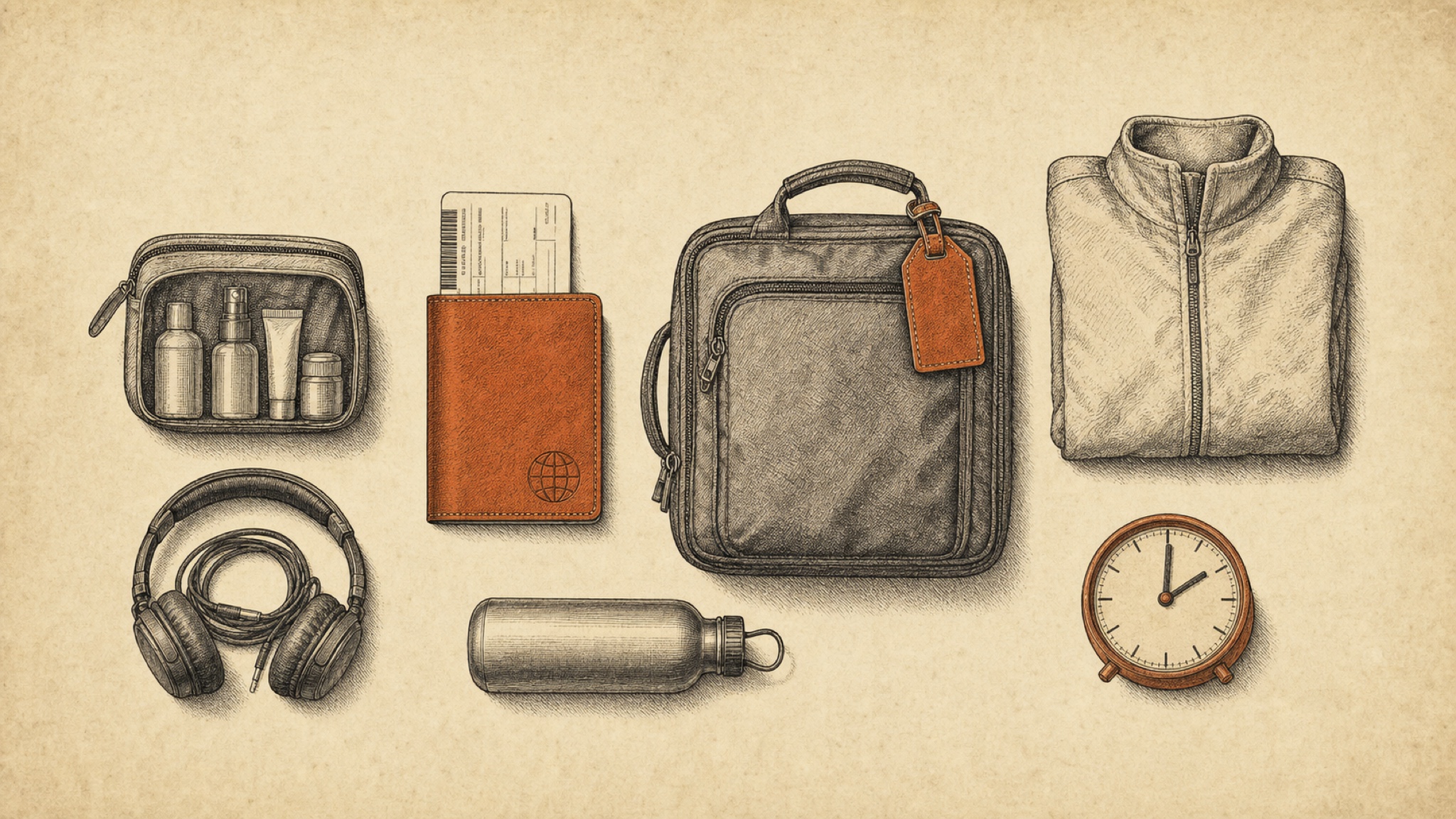
The night before you fly, a quick pass through the basics prevents most morning scrambles:
- ID and passport in your bag, and valid for the whole trip
- Boarding pass downloaded and seat confirmed
- Liquids in the quart bag, power banks in your carry-on
- Bag weighed, tagged, and under the fare's weight limit
- Alarm set to reach the airport two to three hours before departure
- Chargers, medications, and an empty water bottle to fill past security
Sort these out the evening before, and departure day turns into a matter of showing up rested instead of solving problems in a security line.