Cinque Terre Travel Guide: Trains, the Card, and Trail Access
The Cinque Terre's five villages link by one train line. How the Cinque Terre Card works, Via dell'Amore booking rules, and when to visit to skip the crowds.
Table of contents
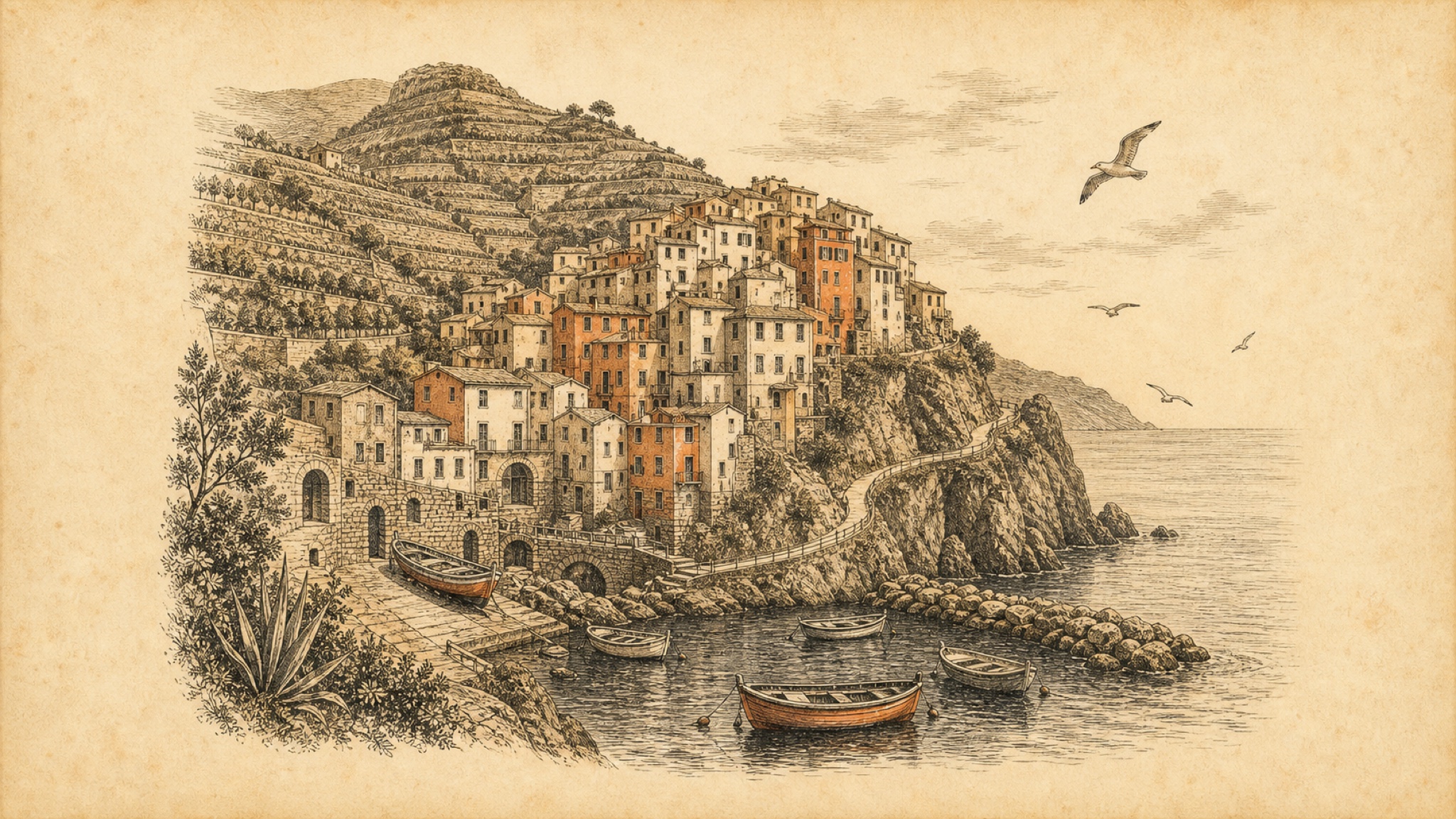
The Cinque Terre is a line of five old fishing villages on Italy's Ligurian coast: Monterosso al Mare, Vernazza, Corniglia, Manarola, and Riomaggiore. The easiest way to visit is to base yourself in La Spezia or Levanto, ride the frequent Cinque Terre Express between the towns instead of driving, and buy a Cinque Terre Card if you plan to walk the coastal trails. According to the Parco Nazionale delle Cinque Terre, the authority that runs the area, the card comes in two versions and is required on the paid trails during the main season, which for 2026 runs from mid-March to early November. This guide covers the logistics an independent traveler needs as of July 2026 - trains, the card, trail access, and timing. It does not rank hotels or restaurants.
The five villages and the train that connects them
The five towns sit within a short stretch of coast, and the train is the spine that ties them together. The Cinque Terre Express is a regional service that runs along the Levanto to La Spezia line and stops at all five villages, in the order Riomaggiore, Manarola, Corniglia, Vernazza, and Monterosso al Mare heading north.
Trains run often through the day, roughly every 15 to 30 minutes in the busy months. The hop between two neighboring villages usually takes under five minutes, and the ride from La Spezia to the first village is about ten minutes. Because the stations sit right in each village, you can see two or three towns in a single day without ever touching a car. The park is also a UNESCO World Heritage site, which is part of why access and building are tightly controlled.
Do you need a Cinque Terre Card?
You need a card if you want to walk the paid sections of the coastal trail or the Via dell'Amore. You do not strictly need one just to ride the trains, since you can buy point-to-point tickets instead. The value of the card is bundling: the Parco Nazionale delle Cinque Terre sells it in two forms, a Trekking Card and a Train Card.
The Trekking Card covers the paid trail sections, the Via dell'Amore, the small shuttle buses inside the villages, and station restrooms. The Train Card adds unlimited second-class regional train travel on the Levanto to La Spezia line for the day. The park sets prices by demand band and lists the current rates and season calendar on its official card portal, so confirm before you buy. As a guide to scale, the park's published figures put the one-day Trekking Card starting around 7.50 euro, higher on peak days, and the one-day Train Card in the range of roughly 19.50 to 32.50 euro depending on how busy the date is.
| Card | What it covers | One-day price (2026, from) |
|---|---|---|
| Trekking Card | Paid trail sections, Via dell'Amore, village shuttle buses, station restrooms | Around 7.50 euro |
| Train Card | Everything in the Trekking Card plus unlimited regional trains, Levanto to La Spezia | Roughly 19.50 to 32.50 euro by demand band |
You can check the season dates and buy either card on the park's site at card.parconazionale5terre.it. If you are only riding trains and not hiking, compare the Train Card price against a couple of single tickets for your planned trips and pick whichever costs less.
Walking the Blue Trail and the Via dell'Amore
The signature walk is the Sentiero Azzurro, or Blue Trail, a coastal path of about 12 kilometers that links all five villages. It is the reason many people come. Sections of it close from time to time after landslides or heavy rain, so the park's official site is the place to check what is open on the day you go, rather than trusting an old blog.
The most famous stretch is the Via dell'Amore, a paved path of a little over one kilometer between Riomaggiore and Manarola. The Parco Nazionale delle Cinque Terre reopened it in August 2024 after roughly a decade of closure and restoration. Walking it now comes with rules: access runs in one direction only, from Riomaggiore toward Manarola, and you must book a timed entry slot in advance. The park states that from March 2026 the Via dell'Amore is included in the standard Cinque Terre Card, but you still reserve a time slot through the same card portal. Book it early on busy dates, because slots fill up.
Getting there without a car
Driving into the villages is the wrong move. Each town has a ZTL, a limited traffic zone that blocks non-resident cars from the center, and parking by the harbors is scarce to nonexistent. The practical approach is to reach La Spezia by train, since La Spezia Centrale connects to larger hubs like Pisa, Florence, Genoa, and Milan, and switch there to the Cinque Terre Express. Levanto works the same way at the northern end.
If you are driving through the region, leave the car at a lot in La Spezia, Levanto, or your accommodation, and continue by train. This keeps your daily costs predictable, which fits the wider approach in our guide to keeping flights, lodging, and daily spending in check. If you are flying in first, the same basics apply as anywhere - our notes on documents, packing, and arrival timing carry over to the transfer to the coast.
When should you go to avoid the worst crowds?
Go in the shoulder season: mid to late April or mid to late October. Spring brings mild days, often around 18 to 22 degrees Celsius, wildflowers on the terraces, and far thinner crowds than the summer peak. The villages are tiny - the resident population across all five is only about four thousand people, against an estimated 2.5 million visitors a year - so timing matters more here than in a big city.
Even in a busy month, you can dodge the crush by using the clock. Day-trippers and cruise passengers tend to pour in around 10 a.m. and clear out by about 5 p.m. Early morning and the evening are the calm, photogenic hours. July and August are hot and full; the deep off-season, from November into mid-March, is quiet but with reduced services, and the park suspends the Cinque Terre Card requirement during those months.
A simple plan for a first visit
If this is your first time and you have one or two days, keep it easy:
- Base in La Spezia or Levanto, not inside the five villages.
- Decide whether you are hiking; if yes, buy the matching card and book a Via dell'Amore slot online before you arrive.
- Start early, ride the Cinque Terre Express to the far village, and work your way back.
- Check the official trail status the morning you hike, since closures are common after rain.
- Save the middle of the day for a meal or a swim, and save the walking for the quieter early and late hours.
Handled this way, the Cinque Terre rewards planning over improvisation. Sort out the train, the card, and your timing before you go, and the coast takes care of the rest.