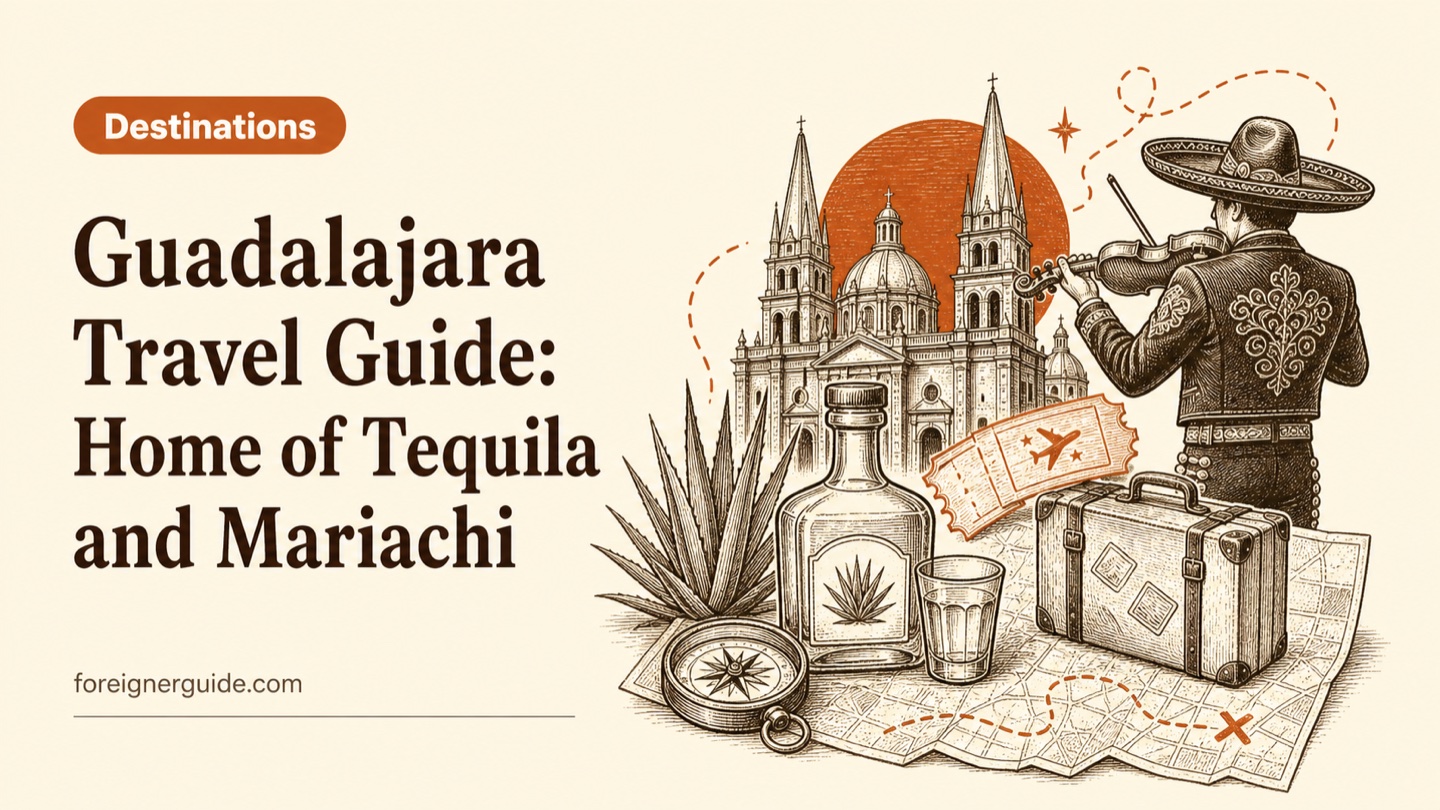
Guadalajara Travel Guide: Home of Tequila and Mariachi
Guadalajara, capital of Jalisco, is where tequila and mariachi began. How to visit the town of Tequila, hear mariachi in the plaza, and time the festival.
Table of contents
Guadalajara is the capital of Jalisco in western Mexico, and both tequila and mariachi music grew out of this region. On a visit you can walk through blue agave fields, hear mariachi in the square that keeps the tradition alive, and see UNESCO-recognized heritage sites, all within a short trip of the city. This guide focuses on experiencing those two traditions, not on visas, flights, or safety.
Why is Guadalajara tied to tequila and mariachi?
Both traditions started in Jalisco, which is what the "birthplace" label points to. Tequila is a spirit distilled from blue agave, a spiky blue-green plant grown across the Jalisco highlands, and the town of Tequila gave the drink its name. Mariachi is the ensemble style of violins, trumpets, guitars, and the deep-bodied guitarrón bass, and it took shape here during the 19th century.
The recognition is official as well as local. UNESCO added the agave landscape around Tequila to its World Heritage List in 2006, and in 2011 it inscribed mariachi on its list of the Intangible Cultural Heritage of Humanity.

Visiting the town of Tequila and the agave fields
The town of Tequila sits about an hour northwest of Guadalajara, and it is the most direct way to see how the drink is made. Blue agave takes years to mature before workers called jimadores cut out the heart of the plant, a step known as the jima. Distilleries in and around town, including José Cuervo's La Rojeña, run tours through roasting, fermenting, and tasting.
José Cuervo also runs a tourist train, the José Cuervo Express, that leaves Guadalajara on weekends and pairs the ride with a distillery visit and time in the fields. The operator sets the schedule and cabin prices by season, so check its current listings before booking rather than trusting older figures. To go on your own, buses and day tours reach Tequila daily, and the town is on the federal government's Pueblos Mágicos (Magic Towns) list.
Where can you hear mariachi in Guadalajara?
The Plaza de los Mariachis, near the historic center, is the traditional spot where ensembles gather and play requests for a fee. It is an everyday scene, not a staged show, which is part of why the city treats it as the music's home ground. For a grander setting, the Teatro Degollado stages mariachi galas through the year.
Once a year the city also holds the Encuentro Internacional del Mariachi y la Charrería (International Mariachi and Charrería Meeting), which its organizers first staged in 1994. Recent editions have run from late August into early September with concerts, a mariachi Mass, and charro horsemanship, so timing a visit around then puts you in front of the biggest performances.
Practical notes for a first visit
Guadalajara's center also holds the Hospicio Cabañas, a former hospital and orphanage that UNESCO listed as a World Heritage Site in 1997 and now runs as a museum of José Clemente Orozco's murals. The nearby district of Tlaquepaque fills a good half-day with ceramics and craft workshops. Because a visit mixes free experiences, like the plaza, with paid ones, like the train and distillery tours, it helps to set a rough daily budget first; our guide to keeping travel costs down covers flights, lodging, and daily spending.