Vietnamese Balm and Pharmacy Buys: Golden Star, Dầu Gió, and Where to Shop
Golden Star Balm and dầu gió oil are cheap pharmacy buys across Vietnam. Here's what they are, where to find them, and how to fly home with them.
Table of contents
Walk into almost any pharmacy in Vietnam and two small items keep turning up in travelers' baskets: a tin of Golden Star Balm, known locally as Cao Sao Vàng, and a bottle of medicated oil called dầu gió. Both are inexpensive, sold across the country, and used for everyday complaints such as headaches, a blocked nose, motion sickness, and insect bites. As of July 2026, you can pick them up at the large chains, Long Châu, Pharmacity, and An Khang, or at the small independent shops marked nhà thuốc. This guide explains what these products are, where to buy them, roughly what they cost, and how to get them home past airport security, where the U.S. Transportation Security Administration (TSA) sets the carry-on liquid limits. It is general shopping and travel information, not medical advice, so read the label and ask a pharmacist or doctor about anything health-related.
What Vietnamese balm and dầu gió actually are
Golden Star Balm (Cao Sao Vàng) is a firm, aromatic balm sold in a small round metal tin, usually 3 to 4 grams. It is built on menthol and camphor, with essential oils such as peppermint, cajuput, and cinnamon in a wax base. You rub a little on your temples, the back of your neck, or an insect bite. It is one of Vietnam's most recognizable everyday products.
Dầu gió translates roughly as "wind oil." It is a liquid medicated oil, usually based on menthol and methyl salicylate, sold in small glass bottles or as a roll-on. In everyday Vietnamese life, people reach for it when they feel run down or congested. One of the best-known labels is Eagle Brand green oil (dầu gió xanh Con Ó); Eagle Brand's own site describes it as a heritage product from Singapore, so it is not strictly Vietnamese, but it is a fixture on pharmacy shelves here. You will also see homegrown and regional brands next to it.
Both are for external use. Typical packaging, including Golden Star's, warns against contact with the eyes and broken skin and advises against use on very young children, often stating not for children under three. The menthol content is high, so a small dab goes a long way. Here is how the most common buys compare:
| Product | Form | Common everyday uses |
|---|---|---|
| Golden Star Balm (Cao Sao Vàng) | Firm balm in a tin | Headaches, colds, insect bites |
| Dầu gió (medicated oil) | Liquid oil or roll-on | Blocked nose, nausea, minor aches |
| Tiger Balm-style ointment | Soft balm in a jar | Muscle and joint soreness |
Where do you buy them in Vietnam?
Almost anywhere, but the simplest option is any shop with a nhà thuốc (pharmacy) or hiệu thuốc sign. Three national chains dominate the modern end of the market: Long Châu, part of FPT Retail; Pharmacity; and An Khang, owned by Mobile World Group. Vietnamese business media, including VnExpress International, reported Long Châu passing 2,000 stores in 2025, with Pharmacity around 950 and An Khang near 500. Vietnam also has tens of thousands of independent pharmacies, so you are rarely far from one.
Chain branches are handy because prices are marked, staff often speak some English in the cities, and stock is consistent. Some outlets in Hanoi and Ho Chi Minh City stay open 24 hours. Balms and oils also turn up in supermarkets, convenience stores, and traditional markets, but for the genuine article and proper storage a licensed pharmacy is the safer choice. If you are still planning the trip, sorting out health basics early helps; our rundown of Vietnam travel shots and what the CDC recommends is a good place to start before you worry about pharmacy runs.
How much do pharmacy buys cost?
Very little. A small tin of Golden Star Balm or a bottle of dầu gió typically costs the equivalent of one or two US dollars, which is why so many visitors buy a handful as gifts. More broadly, expat and teaching guides that cover buying medicine in Vietnam report that over-the-counter items generally cost far less than in many Western countries, with everyday painkillers among the cheapest.
Prices vary by brand, size, and where you shop, and chain stores may charge a little more than a market stall in exchange for marked prices and reliable stock. Because the outlay is so small, it is worth paying at a proper pharmacy rather than chasing the lowest street price on a product you cannot verify.
Other pharmacy buys worth your baggage space
Beyond balm and oil, a few practical buys suit the climate and the kind of travel you do in Vietnam. Oral rehydration salts, often sold as oresol, help after a hot day or a stomach upset. Motion-sickness tablets are useful for boat trips in Ha Long Bay or winding roads in the north. Insect repellent, anti-itch cream, adhesive plasters, and basic paracetamol round out a simple travel kit.
One thing to plan for: under Vietnamese regulations, antibiotics require a prescription, though enforcement is stricter at the big chains than at small independent shops. Do not count on buying prescription medicines casually. Bring your own supply with the original packaging and a doctor's note, since brand names and dosages differ from what you may know at home.
Bringing balms and oils home without trouble at security
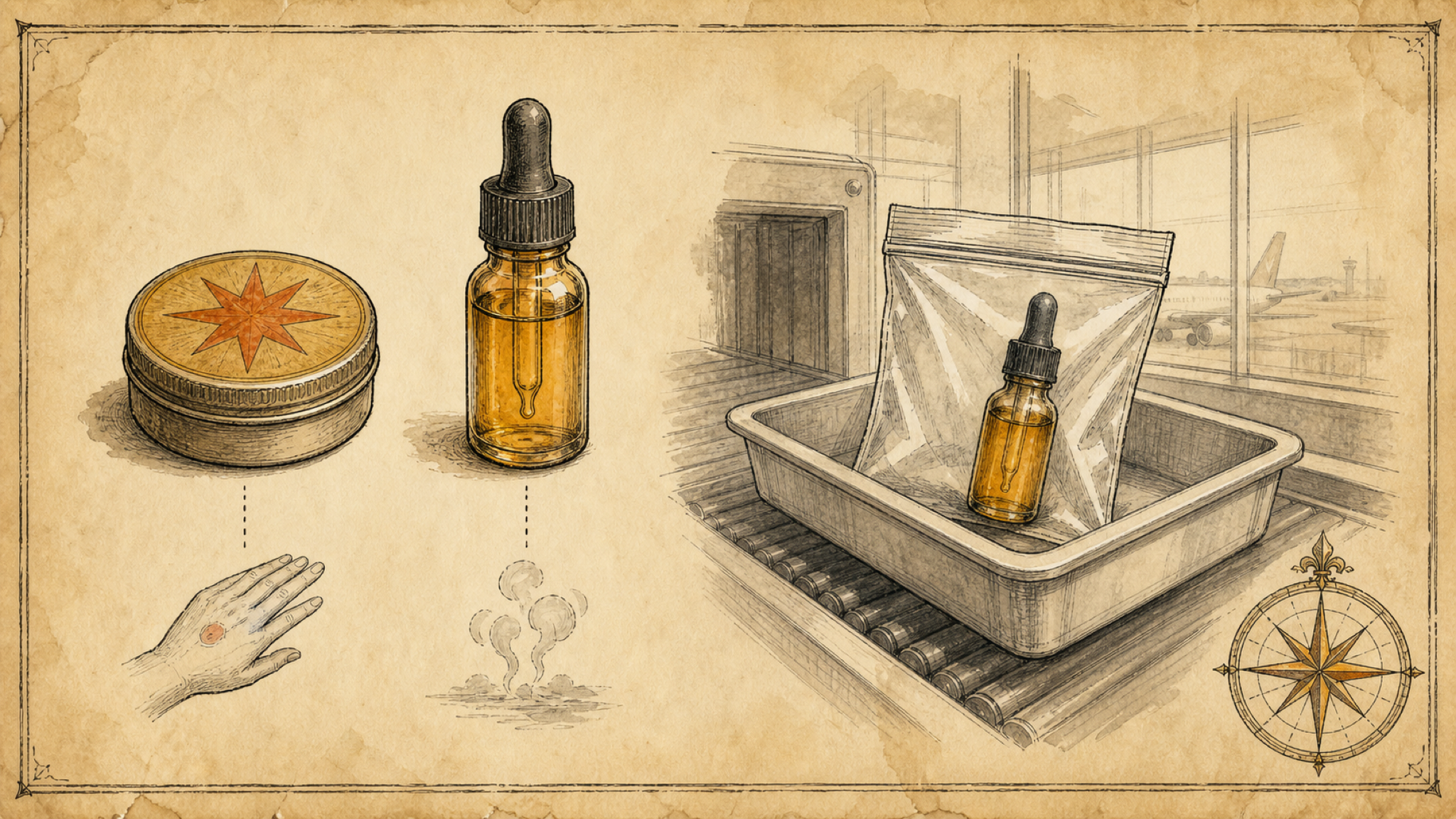
Solid balm tins are the easy case. They are not liquids, so a 4-gram tin of Golden Star Balm can go in your carry-on without fuss. Liquid dầu gió is different. The TSA 3-1-1 rule allows liquids, gels, and creams in carry-on bags only in containers of 100 milliliters (3.4 ounces) or less, all fitting in one quart-size bag; anything larger goes in checked luggage. A standard 24-milliliter oil bottle sits well under that limit. TSA also allows medically necessary liquids above 100 milliliters if you declare them for separate screening. You can confirm the current rules on the TSA liquids page.
Two more things save headaches. Keep everything in its original, labeled packaging so customs officers can see what it is. And check your destination's import rules before you fly, because some countries restrict certain camphor or herbal preparations; when in doubt, declare them.
A quick check before you buy
Stick to licensed pharmacies rather than street vendors or unlicensed market stalls, where counterfeits are more likely. On the box, check the seal, the expiry date, and the registration number. If you are unsure what something treats, ask the pharmacist; the chains publish customer hotlines, and city branches usually have someone who can help in English. Do a small patch test on your skin first, since these products are strong and heavy on menthol. Treat them for what they are, symptomatic relief for minor everyday complaints, and see a doctor if symptoms are serious or do not ease.