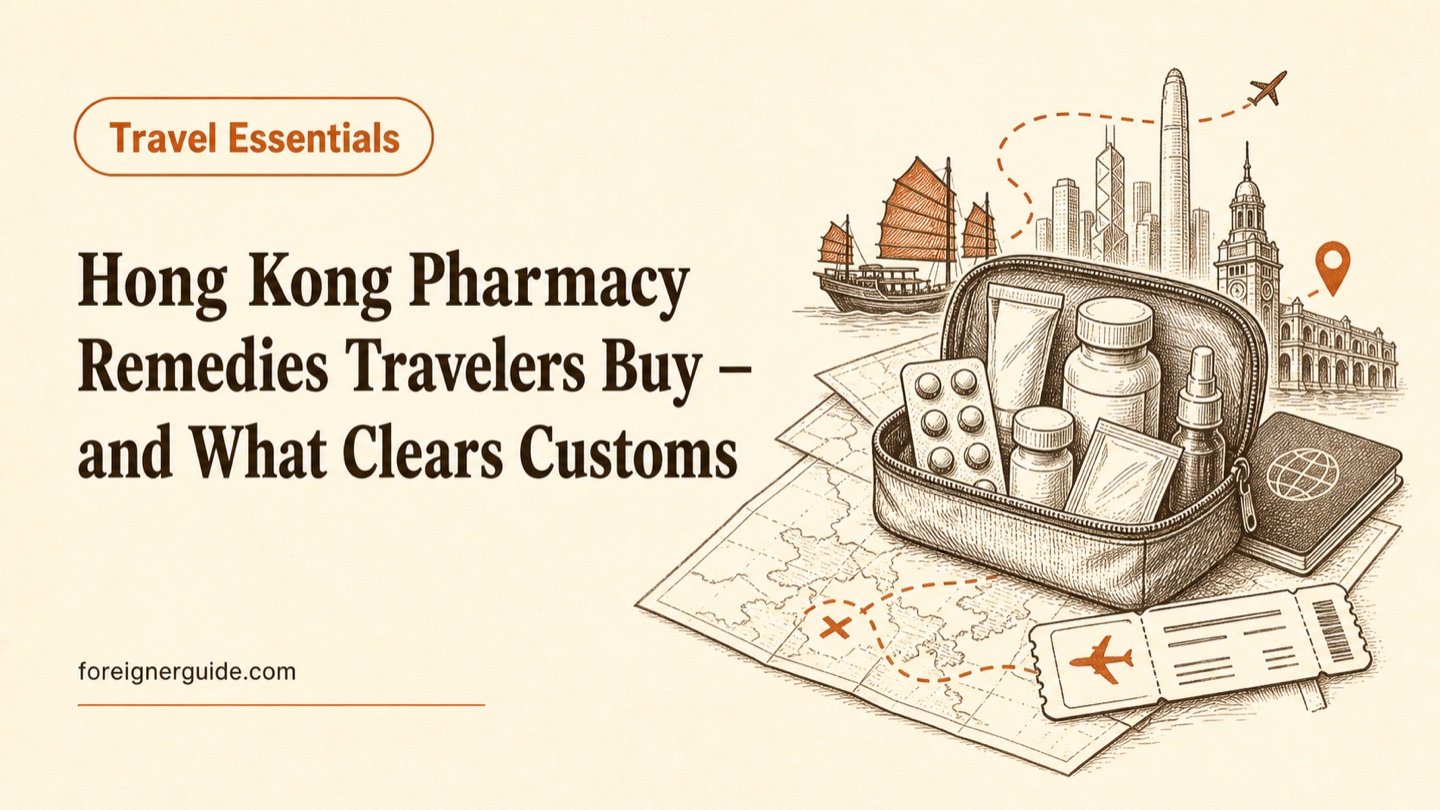
Hong Kong Pharmacy Remedies Travelers Buy — and What Clears Customs
What Hong Kong pharmacy remedies travelers buy, from Po Chai Pills to White Flower Oil, where to find them, and what to check before taking them home.
Table of contents
Hong Kong's pharmacies are stocked with a handful of local remedies that travelers reliably pack home: Po Chai Pills for an upset stomach, White Flower Oil (Pak Fah Yeow) for headaches and stuffy noses, Tiger Balm for aches, and a wide range of medicated oils and drugstore skincare. Most are inexpensive over-the-counter products you can buy at Watsons, Mannings, or any pharmacy showing the red "Rx" logo. As of July 2026, the Department of Health's Drug Office is the body that licenses these shops and registers the medicines they sell, so it is also where you can check that a product or pharmacy is legitimate. This guide covers common over-the-counter remedies and where to buy them, not prescription drugs, and offers general information for travelers rather than medical advice.
The remedies travelers pack home
Three products turn up in almost every visitor's shopping bag, and each does something different.
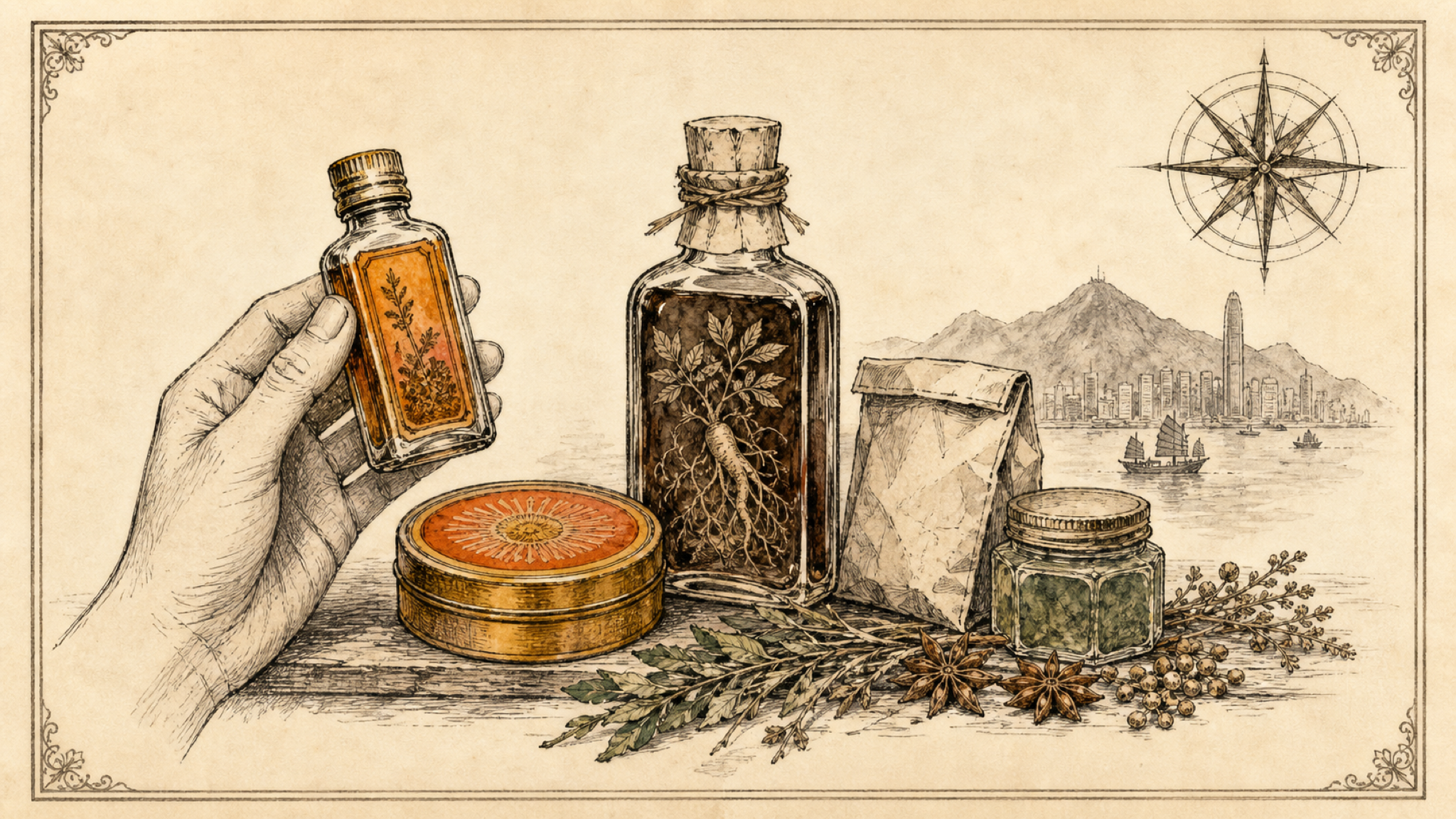
Po Chai Pills (保濟丸) are tiny herbal pellets sold in small glass vials, taken for indigestion, nausea, bloating and mild diarrhea. Li Chung Shing Tong, the Hong Kong maker, dates the brand to 1896, and the little bottles travel well because a single dose is self-contained.
White Flower Oil, known locally as Pak Fah Yeow (白花油), is a strong-smelling medicated oil dabbed on temples, wrists or under the nose for headaches, dizziness, motion sickness, insect bites and blocked noses. Hoe Hin, the maker, traces the formula to Penang in the late 1920s. US drug labeling filed with the National Library of Medicine lists its main active ingredients as methyl salicylate (around 35%), menthol (around 29%) and camphor, alongside eucalyptus and lavender oils, which is why a dab under the nose feels cooling and helps clear congestion.
Tiger Balm, the camphor-and-menthol ointment sold in small jars and as stick-on patches, is used for muscle aches, tension headaches and insect bites. It is a regional brand rather than a Hong Kong original, but every Watsons and Mannings carries the range.
Beyond these three, drugstores stock other medicated oils, herbal throat lozenges, and the Japanese and Korean skincare that both big chains keep well supplied.
| Product | Common use | Form |
|---|---|---|
| Po Chai Pills | Indigestion, nausea, bloating | Herbal pellets in small vials |
| White Flower Oil | Headache, blocked nose, motion sickness | Medicated oil in small bottles |
| Tiger Balm | Muscle aches, insect bites | Ointment jar or patch |
Where should you shop — Watsons, Mannings, or a local pharmacy?
For everyday remedies any of the three works, but there is a real difference in what each can legally sell. Watsons and Mannings are the two big chains, with Watsons tied to the ParknShop supermarket group and Mannings to the Wellcome group, and both are licensed pharmacies that employ registered pharmacists and can fill prescriptions.
The detail worth learning is the red "Rx" logo. The Department of Health's Drug Office says only registered pharmacies may display that logo and use the title "pharmacy" or "dispensary", and that a registered pharmacist must be on duty to advise on medicines and to dispense prescription and pharmacist-only drugs. A shop signed as a "medicine store" (藥行) without the Rx mark can sell general remedies like White Flower Oil but not prescription medicines. All of this sits under the Pharmacy and Poisons Ordinance (Cap. 138).
If you want to confirm a shop or check that a medicine is registered, the Drug Office keeps public registers and a searchable drug database on its site at drugoffice.gov.hk. For a branded staple like Po Chai Pills, the maker is Li Chung Shing Tong (李眾勝堂).
Can you bring these remedies home?
Usually yes for small, personal-use amounts of over-the-counter remedies, but two things catch travelers out: liquids and ingredients. Medicated oils are liquids, so a bottle of White Flower Oil in your carry-on has to fit the airport security limit. Most authorities cap carry-on liquids at containers of 100 ml, and White Flower is usually sold in bottles of 20 ml or less, so it clears easily; pack larger bottles in checked luggage.
The bigger question is what is inside. Balms and oils like White Flower and Tiger Balm are built on methyl salicylate and camphor, and some countries limit or scrutinize camphor products at the border, so check your destination's rules before buying in bulk. A number of traditional Chinese proprietary medicines also contain animal-derived ingredients such as musk or toad venom, which many countries restrict or ban from import. Keep everything in its original packaging with the ingredient list, and declare herbal or traditional medicines on your arrival card whenever the customs form asks about them.
The trade-offs are much the same across the region: the same medicated-oil questions come up in our guide to Vietnamese balms like Golden Star and Dầu Gió, and the customs side of what to leave behind is covered in the Thai pharmacy roundup.
A quick checklist before you buy
- Look for the red Rx logo when you need a pharmacist's advice or a prescription filled.
- Buy small sizes for hand luggage, keeping oils under the 100 ml carry-on limit or moving them to checked bags.
- Keep receipts and original boxes so ingredients stay readable at customs.
- Check your home country's import rules before buying animal-derived or high-camphor products in quantity.
- Verify anything you are unsure about through the Drug Office register.
None of these remedies replaces seeing a doctor or pharmacist for a real medical problem. They are the everyday, over-the-counter fixes locals reach for, which is exactly what makes them practical, lightweight things to carry home.