German Pharmacy Products Worth Buying and Where to Find Them
German drugstores (dm, Rossmann) sell the skincare and vitamins worth buying; medicine comes from an Apotheke, and non-EU visitors can reclaim 19% VAT.
Table of contents
Most of the German pharmacy products travelers bring home are not medicine at all. The cheap, well-made skincare, vitamins, and toiletries people stock up on come from a Drogerie (a drugstore) such as dm or Rossmann, while actual medicines come from an Apotheke (a pharmacy). As of July 2026, the German customs authority (Zoll) lets shoppers who live outside the EU claim back the 19% value-added tax on a single receipt over €50.01. This guide is for travelers and new arrivals deciding what to buy and where. It is general shopping information, not medical advice, and both prices and tax rules can change.
Apotheke or Drogerie: where do you actually buy them?
For cosmetics, vitamins, and everyday toiletries, head to a Drogerie; for real medicine, you need an Apotheke. They are separate shops with separate rules, and mixing them up is the most common mistake first-time visitors make.
A Drogerie is a health-and-beauty store. The three big chains are dm, Rossmann, and Müller, and you will find them in most city centers and larger train stations. dm, founded in 1973 in Karlsruhe, is Germany's largest drugstore by sales, and the company says it runs more than 4,000 stores across Europe. Rossmann started in 1972 near Hanover and is the second-largest. Müller carries a wider range, adding toys, stationery, and a larger perfume section.
Here is the catch: a Drogerie is not allowed to sell actual medication in Germany, not even a low dose of ibuprofen. Those sit behind the counter at an Apotheke, which is a licensed pharmacy. So a drugstore is where you buy face cream and vitamin tablets; a pharmacy is where you buy painkillers and cold remedies.
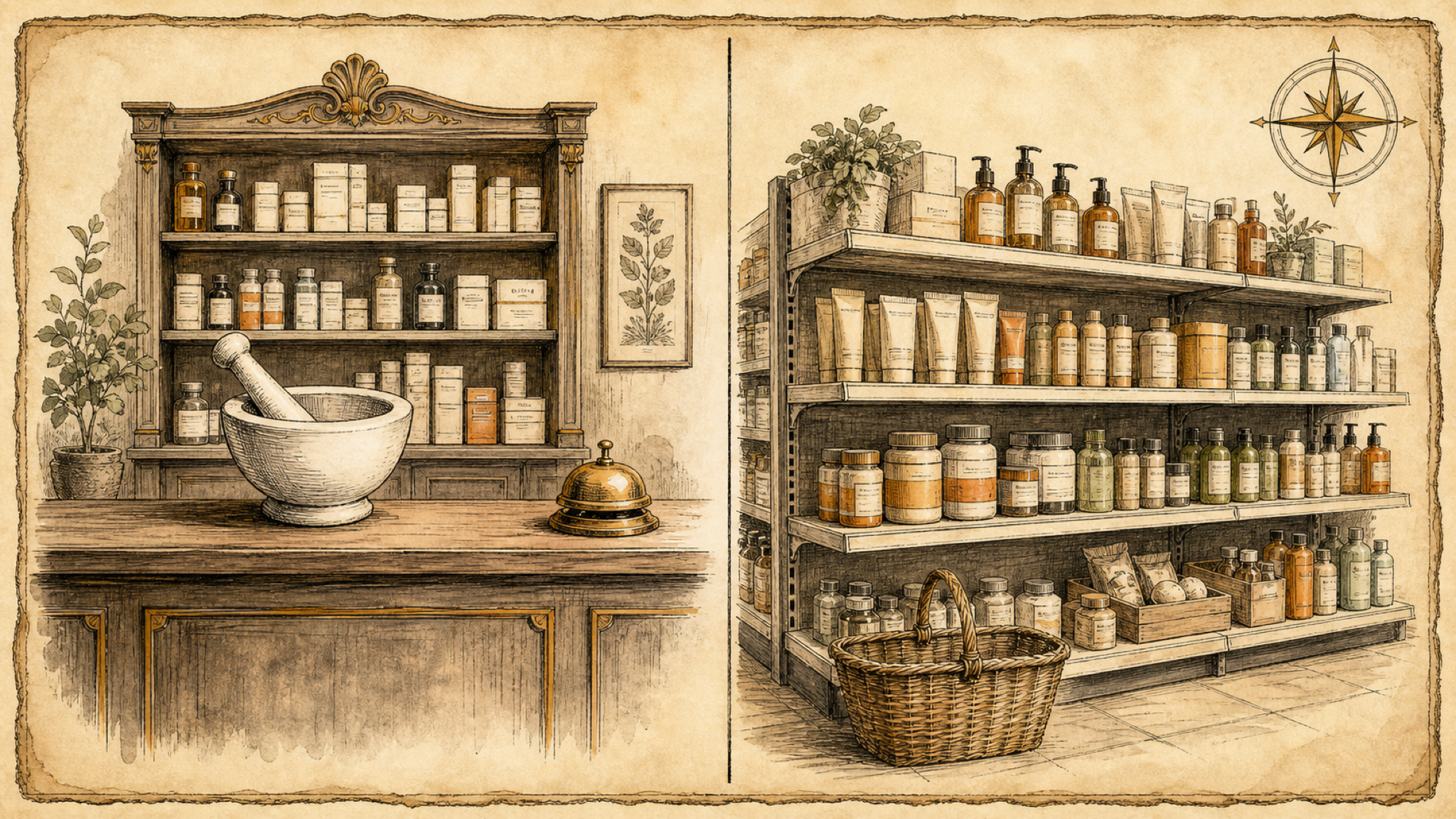
Drugstore finds worth putting in your basket
Most of the value at a Drogerie sits in the house brands, which are made for the chain and priced below the name brands next to them on the shelf. A few that travelers come back for:
- Balea — dm's own line of face, hair, and body care, from cleansers to sheet masks.
- alverde — dm's certified-organic cosmetics range, if you want natural ingredients.
- Isana and Mivolis — Rossmann's own labels for toiletries and vitamin supplements.
- Weleda Skin Food — a rich moisturizer from Weleda, a natural-cosmetics maker founded in 1921; a small tube is a common buy for dry skin and chapped hands.
- Labello — an inexpensive German lip balm brand that is easy to slip into a bag.
- Effervescent vitamin and magnesium tablets (Brausetabletten) — sold in slim tubes that travel well.
- Travel-size toiletries — shampoo, toothpaste, and shower gel in bottles under 100 ml, which is handy for carry-on bags.
If you are deciding which chain to walk into, this is roughly how they compare:
| Chain | Own budget brands | Best known for |
|---|---|---|
| dm | Balea, alverde | Skincare and organic ranges |
| Rossmann | Isana, Mivolis | Makeup and supplements |
| Müller | Various in-house lines | Widest overall selection |
Actual medicine still comes from an Apotheke
In Germany, even common over-the-counter drugs like ibuprofen and paracetamol are sold only in pharmacies, not in drugstores. This category is called apothekenpflichtig, meaning pharmacy-only: you do not need a doctor's prescription, but you do have to buy it from the pharmacist at the counter.
By law, every Apotheke must be owned and run by a licensed pharmacist, which is why staff can give real advice on dosage or a suitable cold remedy. If you take prescription medication, bring enough for your trip along with your prescription or a doctor's note, and check your airline's rules for carrying it. A wound-and-skin ointment called Bepanthen is one of the pharmacy staples many people pick up.
Pharmacies keep normal shop hours and close in the evenings and on Sundays, but there is always an emergency service. Pharmacies take turns staffing a night-and-weekend rota called the Notdienst, and a notice on the door of any closed Apotheke points you to the nearest one that is open.
Can you get the VAT back, and what can you bring home?
Yes. If you live outside the EU, you can reclaim the 19% VAT, but only if you handle the paperwork before you leave. According to the German customs authority (Zoll), the goods must be bought by someone whose residence is outside the EU and carried out of the EU in personal luggage.
The main conditions to remember:
- Your purchase must come to more than €50 on a single receipt at one store on the same day (the threshold is €50.01).
- Ask the cashier for a Tax-Free Form and keep the original receipt before you leave the shop.
- Get the form validated by customs when you exit the EU, then claim your refund.
- The goods have to leave the EU within three months of purchase.
One more packing note: airport security limits liquids, gels, and creams in carry-on bags to containers of 100 ml or less. Anything bigger, such as a full-size shampoo or a large body lotion, should go in your checked luggage.
A few tips before you shop
- Bring a reusable bag. German shops charge for carrier bags, and it is easy to end up with an armful.
- dm and Rossmann take cards, but keep some cash for small pharmacies and kiosks that still prefer it.
- Labels are in German, so read ingredient lists carefully if you have allergies or sensitive skin.
- Buy full-size liquids near the end of your trip so they go straight into checked luggage.
- If Germany is one stop on a longer trip, sort out any recommended travel vaccinations early, since some need weeks to take full effect, as the timing notes in this rundown of travel vaccines the CDC recommends for India make clear.