Vietnam Travel Shots and Vaccines: What the CDC Recommends
As of July 2026, the CDC recommends hepatitis A and typhoid for most travelers to Vietnam, plus hepatitis B, Japanese encephalitis, and rabies by trip type.
Table of contents
Planning a trip to Vietnam usually means a short visit to a travel clinic, not a long list of mandatory shots. As of July 2026, the CDC's Travelers' Health page for Vietnam recommends that most travelers stay current on routine vaccines and add hepatitis A and typhoid, with hepatitis B, Japanese encephalitis, and rabies coming into play depending on how long you stay and what you do. Vietnam does not require a yellow fever certificate unless you arrive from a country where yellow fever spreads. This guide sums up that CDC guidance for international travelers on a normal trip. It is general information, not medical advice, so a clinician who reviews your health history and route has the final word.
Which shots does the CDC recommend for most travelers?
Hepatitis A and typhoid are the two travel-specific vaccines the CDC suggests for almost everyone, on top of the routine ones you may already carry. The CDC's Vietnam page recommends hepatitis A for unvaccinated travelers age one and older, and typhoid for most travelers, especially anyone staying with friends or relatives or heading to smaller cities and rural areas. Both diseases spread through contaminated food and water, so the risk starts the moment you eat outside a controlled hotel kitchen.
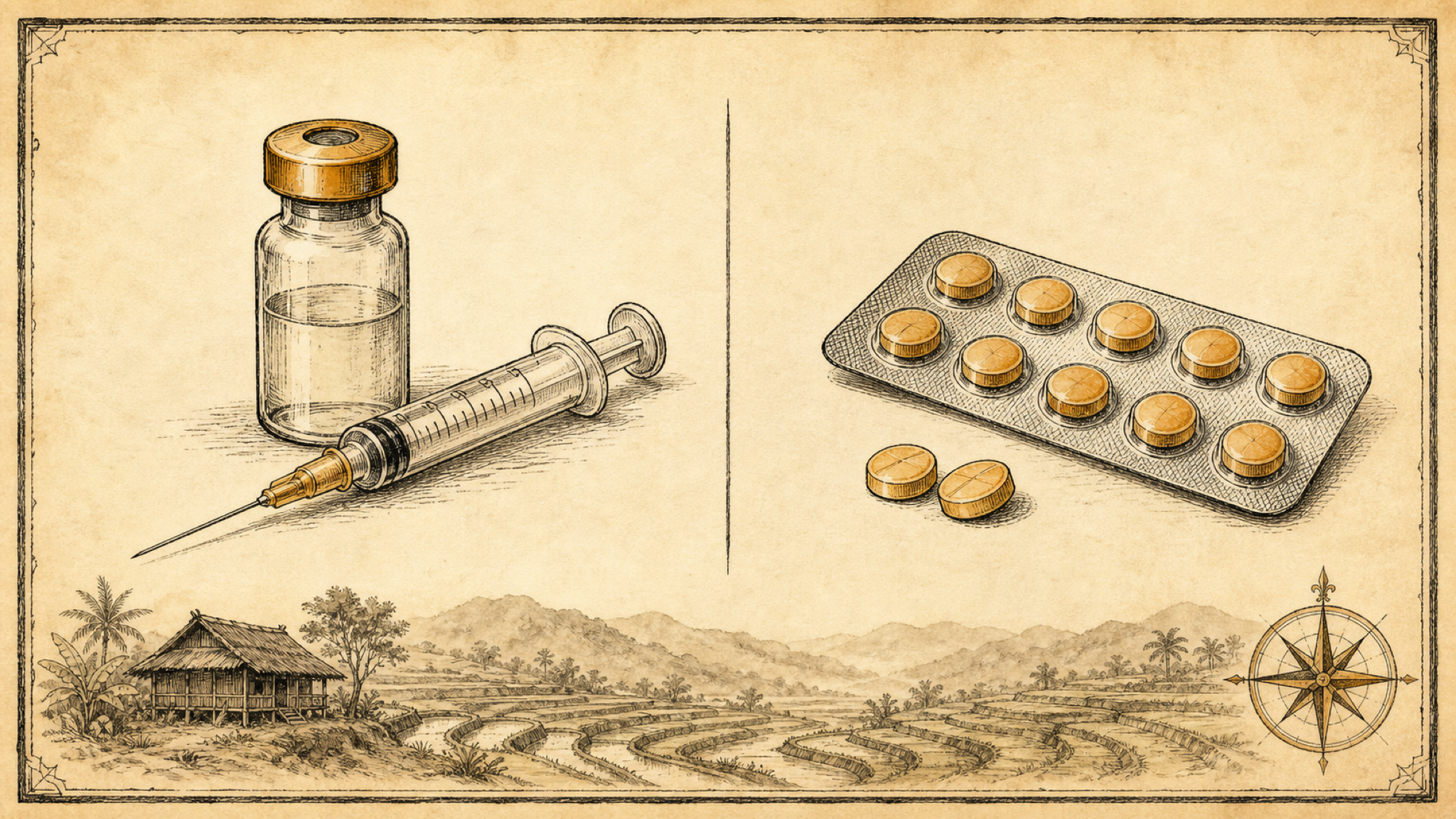
Typhoid comes in two forms worth knowing about: an injectable dose that protects for about two years, and an oral course of capsules that lasts around five years, which suits people who travel often. Your clinic can tell you which fits your schedule.
The CDC also expects travelers to be up to date on routine vaccines before any international trip. Its Vietnam page lists chickenpox, diphtheria-tetanus-pertussis, flu, measles-mumps-rubella, polio, and shingles as the routine set to check. Measles is the one to confirm carefully, since gaps in childhood coverage are a common reason adults turn out not to be protected. Here is how the CDC frames the core recommendations at a glance:
| Vaccine | Who the CDC recommends it for |
|---|---|
| Hepatitis A | Unvaccinated travelers age 1 and older |
| Typhoid | Most travelers, especially rural stays or visiting friends and relatives |
| Hepatitis B | Unvaccinated travelers of all ages |
| Japanese encephalitis | Stays of a month or more, or rural and outdoor trips |
| Rabies | Higher animal contact, long stays, and young children |
Which vaccines depend on your trip?
Three vaccines move from optional to sensible depending on how long you stay and what you do. Hepatitis B, Japanese encephalitis, and rabies are the ones your clinician weighs against your itinerary.
The CDC recommends hepatitis B for unvaccinated travelers of all ages going to Vietnam. It spreads through blood and bodily fluids, so the case is strongest for longer stays, anyone who might need medical or dental care abroad, tattoos or piercings, and new relationships. Many adults have already had the childhood series, so this is often a records check rather than a new shot.
Japanese encephalitis is a mosquito-borne brain infection. The CDC recommends the vaccine for travelers relocating to Vietnam or spending a month or more there, and says to consider it for shorter trips that involve rural areas, rice paddies, or outdoor activity, where the mosquitoes that carry it are most active. A week in Hanoi and Ha Long Bay is a different risk profile from a month cycling through the countryside.
Rabies is almost always fatal once symptoms appear, which is why the pre-trip series matters even though bites are uncommon. The CDC suggests discussing rabies vaccination with a provider if you will have more animal contact than average, take a long trip, or travel with young children, who may not mention a lick or scratch. The pre-exposure doses do not replace treatment after a bite, but they simplify that care and buy you time to reach it.
Do you need a yellow fever certificate to enter Vietnam?
Only if you are arriving from a country where yellow fever spreads. The CDC states the yellow fever vaccine is neither recommended nor required for a standard trip to Vietnam, because the disease is not present there. This is an entry rule, not a health recommendation for the destination itself.
The CDC Yellow Book notes Vietnam requires proof of yellow fever vaccination from travelers arriving from a country with risk of yellow fever transmission, which mainly means parts of sub-Saharan Africa and tropical South America. If your route passes through one of those places, you carry an International Certificate of Vaccination or Prophylaxis, the yellow booklet a clinic issues after the shot. Under the international rules in force since 2016, that certificate is valid for life, so a single documented dose covers you indefinitely. A direct flight from the United States, Canada, or another country without yellow fever needs no such paperwork.
Malaria: pills for rural areas, not a vaccine
Malaria has no traveler vaccine, so protection comes from prescription tablets plus bite prevention. The CDC recommends antimalarial medication only for certain rural provinces of Vietnam and names major destinations such as Hanoi, Ho Chi Minh City, and Da Nang among the places that do not call for it. A typical city-and-coast itinerary usually means no pills, while a trip into remote border or forested areas is worth raising with your clinic.
Because there is no shot, everyday habits carry the load: an insect repellent with DEET or picaridin, long sleeves around dusk, and a mosquito net where rooms are not screened. The same precautions cut your risk of dengue, another mosquito-borne illness the CDC flags across Vietnam that has no travel vaccine either. Bite prevention is the one line of defense that helps against both.
How to prepare before you go
Book a travel clinic appointment four to six weeks before departure. That window matters because hepatitis A and hepatitis B are given as multi-dose series, and starting early lets the first doses take effect and leaves room for a second one before a long trip. A late booking is not wasted, though; even a single dose the week before you fly offers real protection.
A simple order of operations keeps it manageable:
- Gather your vaccination records so the clinic can see which routine shots you already have.
- Map your route and length of stay, since rural time and month-plus trips change the Japanese encephalitis and malaria decisions.
- Ask specifically about hepatitis A, typhoid, and whether hepatitis B, Japanese encephalitis, or rabies fit your plans.
- Confirm whether any leg of your journey passes through a yellow fever country that would trigger the certificate rule.
If you are already thinking about on-the-ground safety, this health prep pairs naturally with knowing where pickpockets tend to work in Vietnam and the small habits that foil them. For the vaccine details themselves, the CDC's Travelers' Health page for Vietnam is the source clinics work from, and it is updated as recommendations change.