Thai Pharmacy Products Travelers Buy — and What Not to Take Home
What travelers buy at Thai pharmacies — ya dom inhalers, cooling powder, balms, and cheap OTC meds, plus how to spot licensed shops and what not to fly home.
Table of contents
What travelers actually put in the basket
Thai pharmacies stock the same global painkillers and cold tablets you know from home, but the items travelers ask about are the local specialties, and most cost only a few US dollars each.
The most-requested souvenir is ya dom (ยาดม), a herbal nasal inhaler you sniff to clear a blocked nose, a headache, or a wave of motion sickness. The best-known brand is Poy-Sian Mark II, a small plastic tube with a menthol, camphor, and eucalyptus blend; you unscrew one end to inhale the vapor and the other to dab the oil on your temples. Hong Thai makes a stronger, herbier version in a small jar of dried botanicals.
A few other staples show up again and again:
| Product | What people use it for | Form |
|---|---|---|
| Snake Brand Prickly Heat Powder | Cooling heat rash in humid weather | Talc powder |
| Counterpain | Sore muscles and stiff joints | Rub-on balm |
| Siang Pure Oil | Bug bites, blocked nose, stiff neck | Amber herbal oil |
| Poy-Sian / Hong Thai ya dom | Stuffy head, dizziness, strong smells | Inhaler stick or jar |
Snake Brand is a genuinely local product: the British Dispensary, which makes it, traces the powder back to 1952. Alongside these, the chain stores double as beauty shops, so sunscreen, sheet masks, and Thai skincare brands often end up in the same haul.
Where do you buy it, and how do you know a shop is legitimate?
Two kinds of pharmacy cover almost every need. Chain stores — Boots and Watsons are the big two — sit inside malls such as Siam Paragon, CentralWorld, and ICONSIAM, and inside Suvarnabhumi and Don Mueang airports. They post fixed prices, take cards, print receipts, and usually have English-speaking staff. Watsons runs a store finder on its Thai website if you want to locate a branch before you go.
The second kind is the independent neighborhood pharmacy, a ร้านขายยา (ran khai ya), marked by a green cross on the street. Prices are often a little lower, and the pharmacist may know the local generics well. To check that a shop is licensed, look for three things: the green cross sign, a pharmacist actually on duty, and the Thai Food and Drug Administration license displayed on the wall. A shop that prints you a receipt is a good sign; a market stall or street hawker selling loose pills is not a pharmacy and is best avoided.
Can you buy medicine without a prescription?
Often, yes. Many everyday medicines that need a doctor's note back home — including some antibiotics such as amoxicillin — are sold directly over the pharmacy counter in Thailand. Public-health researchers have documented that antibiotics are widely dispensed by Thai community pharmacies without a prescription, and independent shops tend to be more relaxed about it than the chains.
Easy access is not the same as a good idea. Taking antibiotics for a cold or flu does nothing, because those are viral, and it adds to antibiotic resistance, which the World Health Organization treats as one of the top global public health threats. The safer move is to describe your symptoms to the pharmacist — at Boots and Watsons that conversation usually happens in English — and let them suggest something, or to see a doctor for anything that is not minor. Treat this as general information, not medical advice.
What you can't easily take home
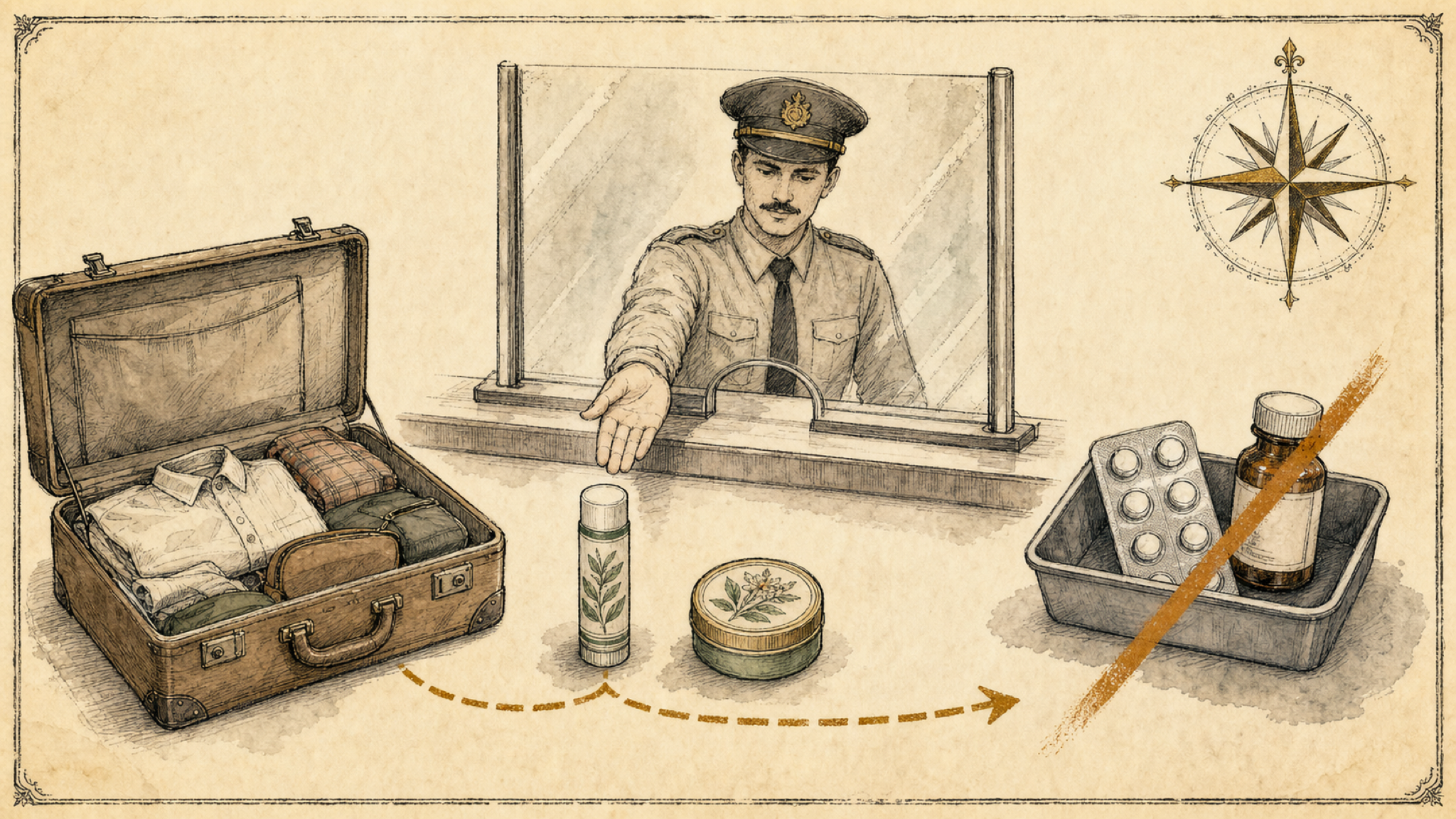
Some of Thailand's cheap, useful pharmacy staples are restricted once you leave. Pseudoephedrine, the decongestant found in many cold medicines, is a controlled substance in Thailand because it can be used to make methamphetamine, and it is tightly regulated or banned in a number of other countries too. A product that is ordinary in one place can be a customs problem in another.
Two habits keep you out of trouble. First, keep medicines in their original packaging with the pharmacy receipt, and carry a copy of any doctor's prescription. Guidance from Thailand's Food and Drug Administration, published on its official site, sets personal-use limits — for example, roughly a 30-day supply for certain prescription medicines carried with a prescription. Second, check the rules for your destination and any layover country before you stock up: the U.S. Centers for Disease Control and Prevention warns in its Yellow Book that medicines legal in one country can be prohibited in another, including in places you only pass through in transit.
A quick pharmacy-run checklist
If you are still planning the trip, it makes sense to sort out which vaccinations Thailand requires and recommends before you fly, so the pharmacy visit is only for on-the-ground extras. Once you are there, this short routine covers most situations:
- Buy from a shop showing a green cross, a pharmacist on duty, and an FDA license.
- Describe your symptoms in plain English and let the pharmacist recommend a product.
- Keep the receipt and the original box for anything you might carry home.
- Check your home country's rules before buying cold medicines or antibiotics to take back.
- Stick to small, personal quantities rather than bulk supplies of any medication.
Used this way, a Thai pharmacy is one of the more useful stops of the trip: a place to cool a heat rash, settle a queasy stomach, and pick up a ya dom or two for the people back home.