Medieval Towns and Castles in Europe: What's Genuinely Old
A short, honest guide to Europe's best medieval towns and castles, from Carcassonne and Bruges to Cesky Krumlov, with UNESCO facts and how to visit each.
Table of contents
If you want a short list of medieval places in Europe that reward the trip, start with a walled town and one real castle. Carcassonne in southern France, the historic centre of Bruges in Belgium, and Český Krumlov in the Czech Republic are all UNESCO World Heritage Sites where the medieval street plan, walls, and stone buildings survive largely intact. Add Rothenburg ob der Tauber in Germany for a compact walled town you can circle on foot. This guide covers a handful of standouts and how to reach them; it does not try to rank every castle on the continent.
Which medieval towns are worth the trip?
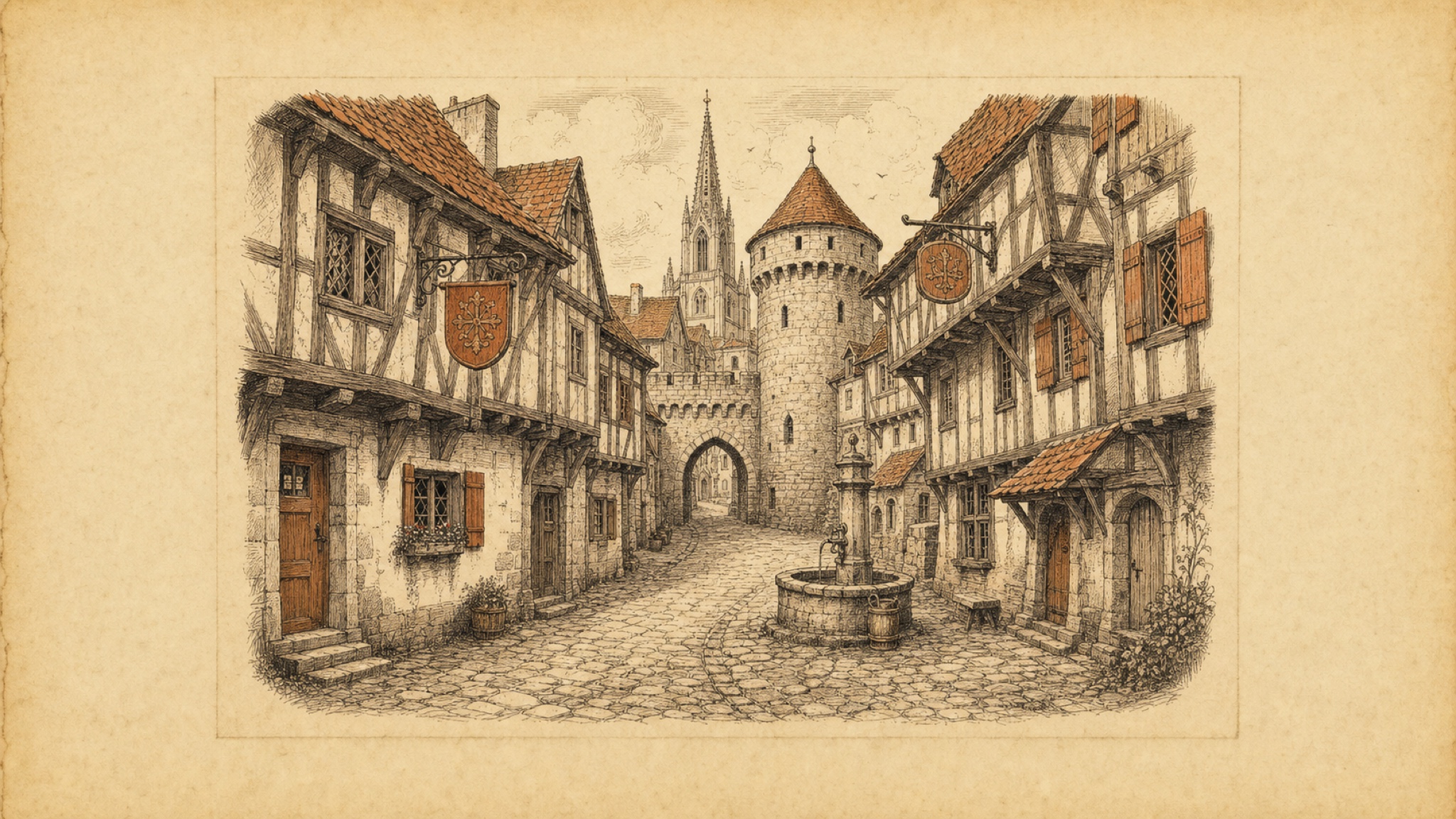
Start with the towns where the whole centre is the attraction, not a single building. UNESCO's World Heritage Centre lists the historic fortified city of Carcassonne (inscribed 1997), the historic centre of Bruges (2000), and Český Krumlov (December 1992). Carcassonne's double ring of walls and towers took its main shape in the 13th century. Bruges kept the street pattern and canal network from its era as a trading city, along with four surviving medieval gates. Český Krumlov sits on a bend of the Vltava river in South Bohemia, below a castle first founded in the 13th century.
Rothenburg ob der Tauber, on Germany's Romantic Road, is a smaller pick with an intact wall walk around the old town. One honest caveat: the town's tourism office notes that roughly 40 percent of the old town was destroyed by bombing in 1945 and rebuilt afterward, so some of what you see is careful reconstruction rather than untouched stone.
Real medieval castles versus medieval-looking ones
Not every famous "castle" in Europe is actually medieval. Neuschwanstein in Bavaria, the one that shaped the Disney castle silhouette, looks like a knight's fortress but was built for King Ludwig II between 1868 and 1886, in the 19th century. The World Heritage Committee inscribed it, together with Ludwig's palaces at Linderhof, Schachen, and Herrenchiemsee, on 12 July 2025, making the group Germany's 55th World Heritage Site. It earns that status as romantic historicism, not as a working medieval fortress.
For walls that actually stood through sieges, look instead at Carcassonne's ramparts or the fortified castle at the core of Český Krumlov. The distinction is practical, not pedantic: Neuschwanstein is a designed fantasy with alpine views, while a town like Bruges is a real medieval city where people still live and work.
How do you actually visit — tickets and timing?
It depends on whether you are seeing an open town or a ticketed castle. Walled towns like Carcassonne's Cité are public streets: you can walk in for free, day or night, and pay only to enter specific sites such as the Château Comtal (the Counts' Castle), which keeps daytime hours of roughly 10:00 to 18:00. Bruges, Český Krumlov, and Rothenburg work the same way, with free lanes and separate charges for museums, belfries, and castle interiors.
Marquee castles are stricter. For Neuschwanstein, the Bavarian Palace Administration (Bayerische Schlösserverwaltung), which runs the site, lists adult admission at €17.50 plus a €2.50 fee for booking online, and it advises reserving ahead because timed-entry slots sell out in the busy months. When you string several of these together, the same planning math applies as when you are keeping flights, lodging, and daily costs down: book the paid castles early and let the free walled towns fill the days between. Carcassonne also fits into a wider loop through southern France, which pairs well with the train-based routes along the French Riviera.