Worst Time to Visit Japan: Rain, Heat, Typhoons, and Crowds
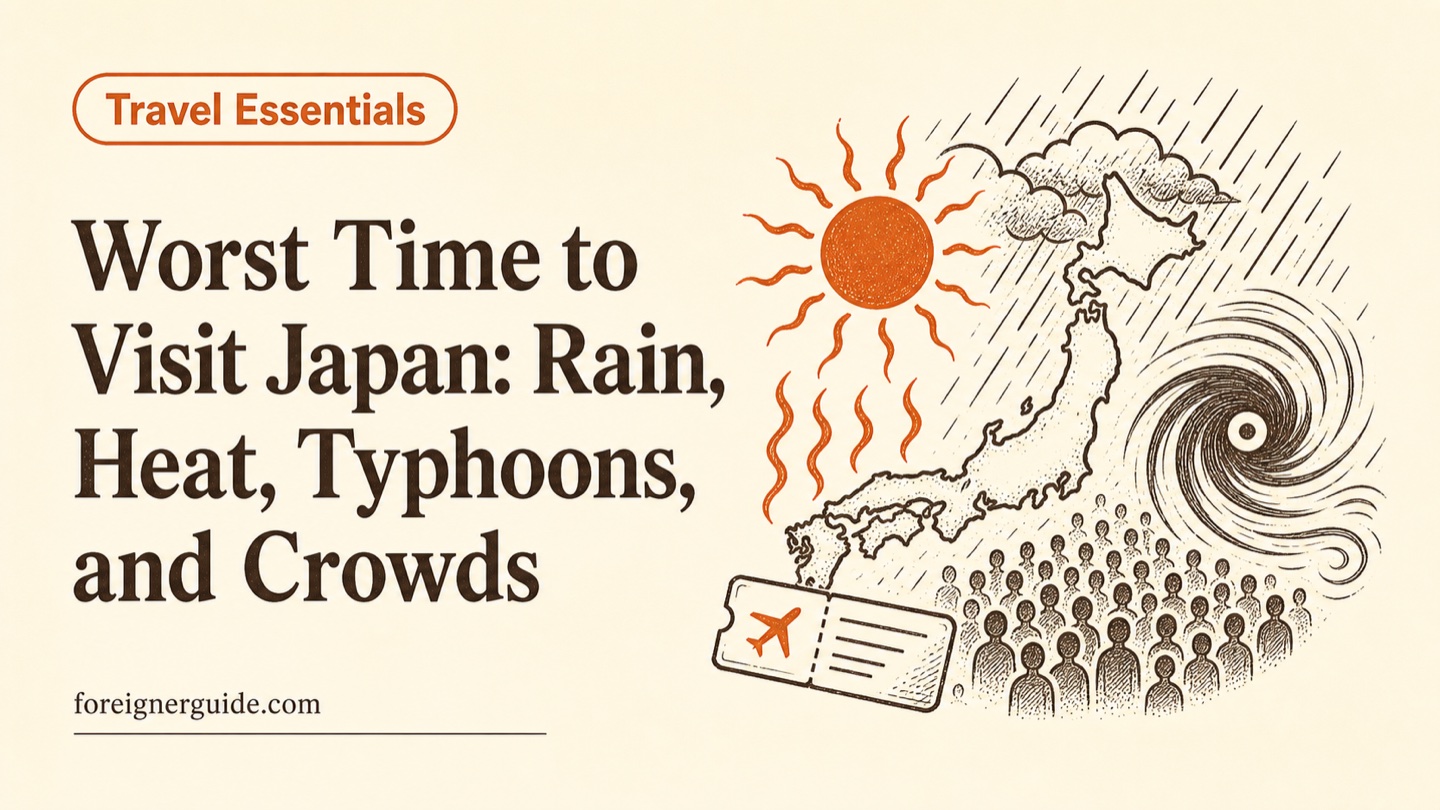
Japan's toughest travel windows are the June to mid-July rainy season, the August heat and typhoon peak, and the Golden Week, Obon, and New Year travel rushes.
Table of contents
There is no single worst time to visit Japan. It depends on what you most want to avoid. As of July 2026, the windows most travelers end up regretting fall into two camps: rough weather and travel rushes. The weather problems are the rainy season from early June to mid-July and the heat-and-typhoon peak of August and September. The crowd problems are Golden Week in late April and early May, Obon in mid-August, and the New Year holiday. The Japan Meteorological Agency tracks the rain and storms, and the Japan National Tourism Organization publishes seasonal travel guidance for visitors. This guide is written for general leisure trips to mainland Japan; the southern islands of Okinawa and the northern island of Hokkaido run on different calendars, which I flag where it matters.
The rainy season: early June to mid-July
The rainy season, called tsuyu in Japanese, is the wet, humid early-summer stretch when a rain front stalls over the country. The Japan Meteorological Agency announces the official start and end for each region every year, and for most of Honshu (the main island) and Kyushu it usually falls between early June and mid-July. The timing shifts by region: Okinawa in the far south enters its rainy season first, often in early May, while the northern Tohoku region starts later, around late June. Hokkaido is the outlier, with no clearly defined rainy season, which is why it draws travelers looking to dodge the wet weeks. Rain rarely falls all day, but you should pack for damp, sticky conditions and plan a few indoor options.
Midsummer heat and humidity
July and August bring the heaviest heat and the highest humidity of the year. The Japan Meteorological Agency classifies any day that reaches 35°C (95°F) or higher as an "extremely hot day," and major cities such as Tokyo, Osaka, and Kyoto log a string of them each summer. The humidity is the real problem: it keeps nights warm and makes walking-heavy sightseeing around temples and gardens draining by midday. If you travel then, front-load outdoor plans to the early morning, keep the middle of the day for museums or department stores, and carry water. Families with young children and older travelers should be especially careful during the midday hours.
How likely is a typhoon to ruin your trip?
Usually not likely enough to cancel over, but enough to plan around. Typhoon season runs from roughly May to October and peaks in August and September, according to the Japan Meteorological Agency. Most storms track toward Okinawa, Kyushu, and Shikoku, yet a single strong typhoon can suspend trains, ground flights, and close attractions across wide areas for a day or two. The practical move is to leave buffer days near the start and end of your trip, book refundable or flexible transport where you can, and check the forecast a few days out. You can follow official storm tracking on the Japan Meteorological Agency website. Sorting out flexible bookings and travel cover is part of the wider job of planning any trip abroad, and it pays off most in typhoon season.
Which weeks do prices and crowds spike?
Three periods each year send much of the country traveling at the same time: Golden Week, Obon, and New Year. Golden Week clusters four national holidays close together — Showa Day on April 29, Constitution Memorial Day on May 3, Greenery Day on May 4, and Children's Day on May 5 — so late April into early May becomes one long domestic rush. In 2027, Japan's Cabinet Office holiday calendar puts that stretch at Thursday, April 29 through Wednesday, May 5, so if you are weighing a spring 2027 trip, those are the exact dates to book around — or to sidestep entirely. Obon, the summer period when many people return to their hometowns, falls in mid-August. The New Year holiday, roughly December 31 to January 3, empties the streets but closes a lot of restaurants, shops, and smaller attractions. During all three, shinkansen (bullet train) seats and hotel rooms sell out early and prices climb, so reserve well ahead or shift your dates to the weeks on either side.
The tough windows at a glance
Each rough period has a different main downside. This quick comparison can help you weigh which trade-off you can live with.
| Period | Main challenge |
|---|---|
| Golden Week (late Apr–early May) | Domestic travel rush, booked-out trains, higher prices |
| Rainy season (early Jun–mid-Jul) | Frequent rain, high humidity |
| Midsummer (Jul–Aug) | Heat of 35°C or more, sticky humidity |
| Typhoon peak (Aug–Sep) | Possible flight and train disruption |
| Obon (mid-Aug) | Second domestic travel rush |
| New Year (Dec 31–Jan 3) | Many businesses and attractions closed |
Choosing dates you won't regret
If you want to sidestep most of these problems, aim for the shoulder seasons. Late spring before the rains arrive and autumn from October into November tend to bring milder, drier weather and no nationwide travel rush, and the Japan National Tourism Organization's official travel site lays out what each season offers. That said, "worst" is personal. If you don't mind carrying an umbrella and you want thinner crowds and better room rates, the June rainy season can be a genuinely good-value time to go. Decide which single factor — weather, crowds, or cost — matters most to you, then pick the window that protects it. One last caveat: holiday calendars shift a little from year to year, and regional weather varies — Okinawa and Hokkaido follow different patterns from Honshu — so re-check the dates and the seasonal outlook for your own year of travel.