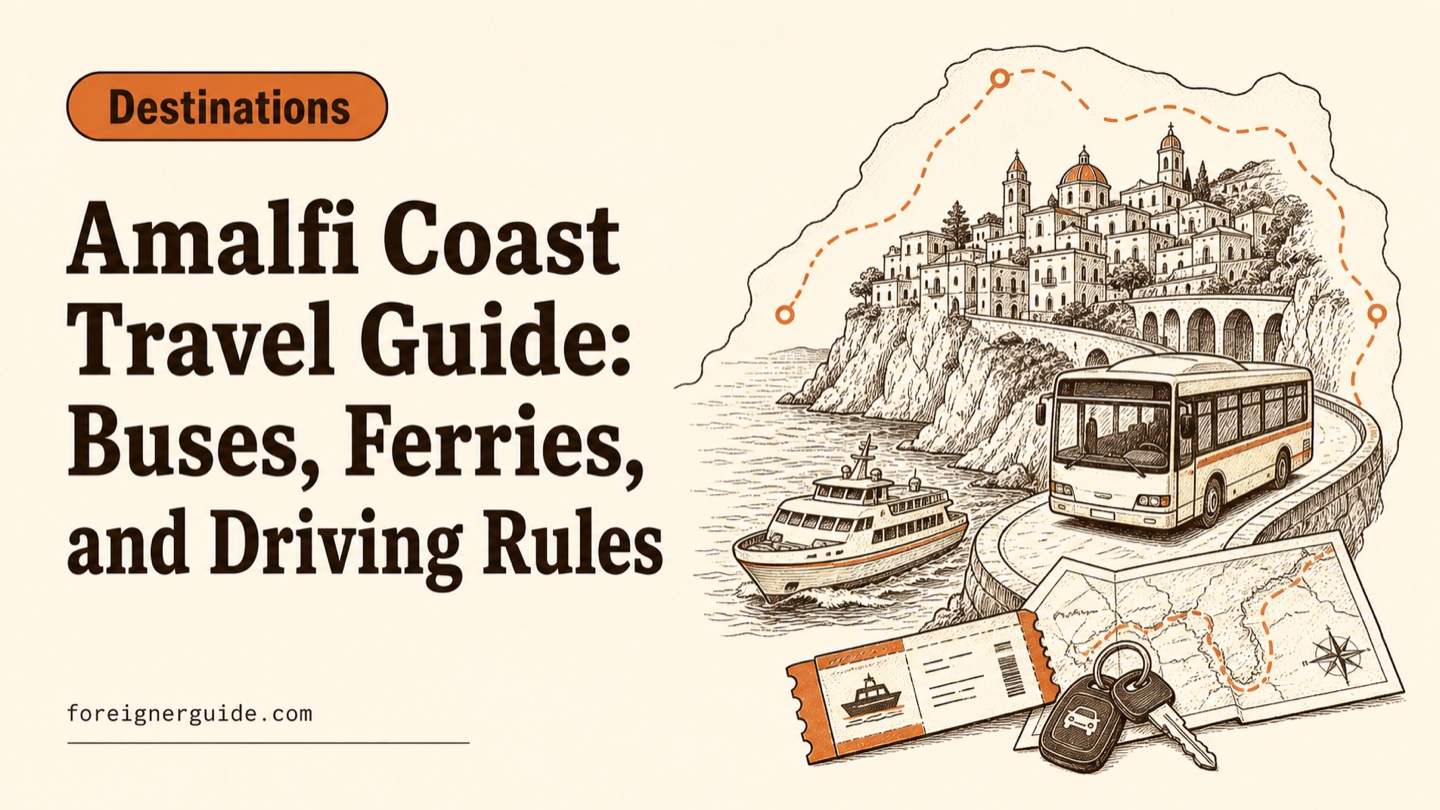
Amalfi Coast Travel Guide: Buses, Ferries, and Driving Rules
Reach the Amalfi Coast via Naples or Salerno, then use SITA buses year-round or Travelmar ferries (late March-October); driving means summer plate limits.
Table of contents
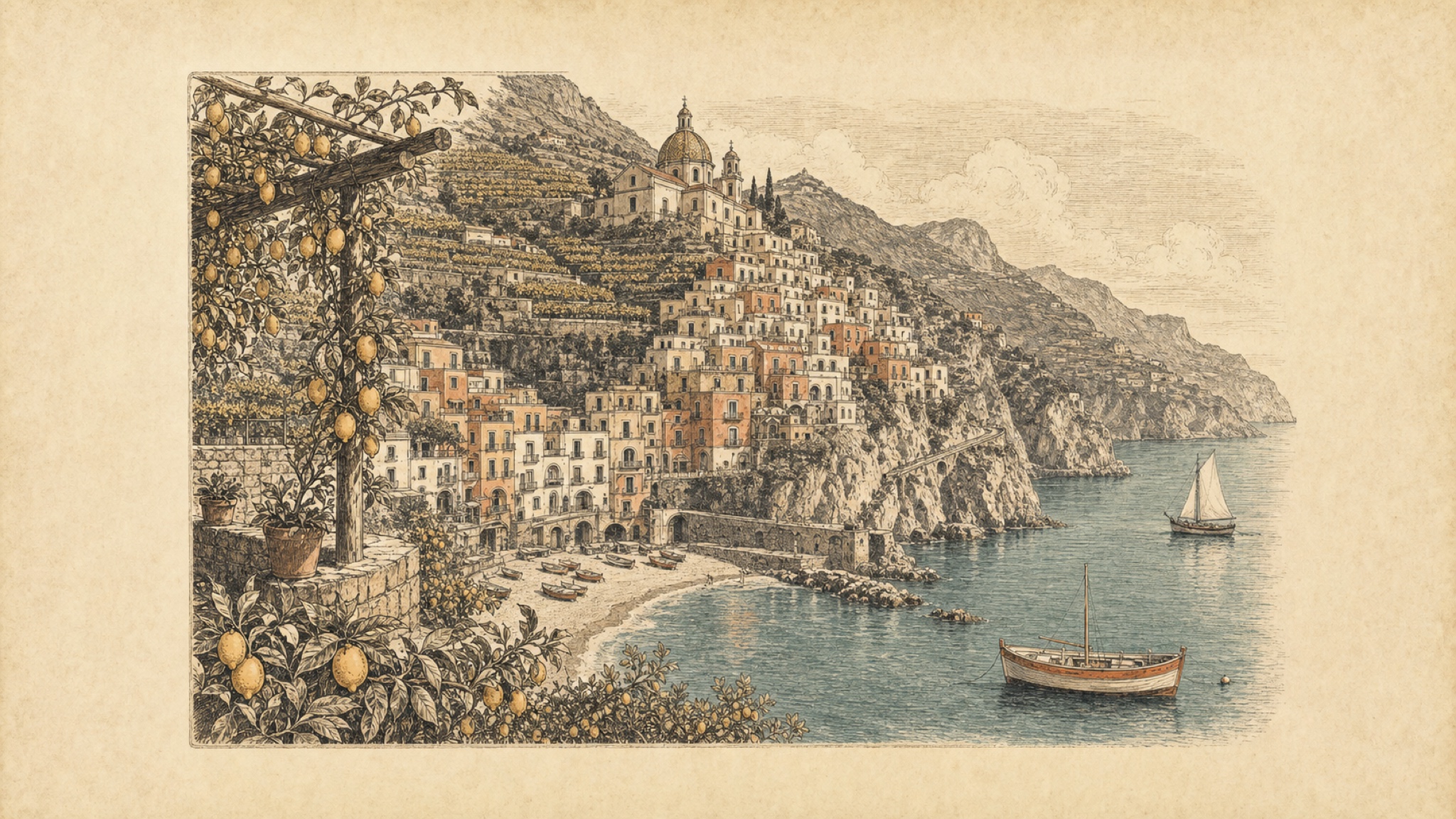
The Amalfi Coast has no train line of its own, so most visitors arrive through Naples, Salerno, or Sorrento and then switch to a bus, a ferry, or a car for the final stretch. As of July 2026, the public SITA Sud buses run all year, while the seasonal Travelmar ferries operate roughly from late March to the end of October. UNESCO lists this stretch of coast, the Costiera Amalfitana, as a World Heritage Site inscribed in 1997, which is part of why the towns stay small, the road stays narrow, and traffic gets tightly controlled in summer.
This guide covers independent travel to the main coastal towns, Positano, Amalfi, Ravello, and their neighbours, using public transport or a rental car. It is general planning information, not a booking service, and fares and timetables shift with the season, so treat the numbers here as a starting point and confirm current details on the official operator sites before you go.
Where does the Amalfi Coast start, and how do you reach it?
The coast runs along the south side of the Sorrentine Peninsula, from Vietri sul Mare in the east to Positano in the west. There is no station in Positano or Amalfi themselves. The two rail gateways are Naples and Salerno, both on the national Trenitalia network, and a third common entry point is Sorrento, reached from Naples on the Circumvesuviana suburban line.
From Salerno you are closest: the port and the bus stops sit near the train station, and both ferries and SITA buses leave from there. From Naples, a fast train to Salerno takes about an hour, after which you continue by bus or ferry. From Sorrento, the SITA bus climbs over the ridge and drops down onto the coast road toward Positano. If you are weighing this against other rail-based coastal trips, the base-and-day-trip logic in our French Riviera travel guide applies here too.
Getting around once you are there
On the coast itself your realistic choices are the bus, the ferry, a car, or a hired driver. Each suits a different priority, so it helps to see them side by side before you settle on a base town.
| Option | Runs when | Rough cost | Good to know |
|---|---|---|---|
| SITA Sud bus | All year | Single ~EUR 1.80-2.60; day pass ~EUR 10 | Cheapest; slow and busy in summer; buy tickets before boarding |
| Ferry (Travelmar) | ~Late Mar to Oct | Salerno-Amalfi ~EUR 10 | Fast and scenic; cancelled in rough seas |
| Rental car | All year | Parking plus fuel, varies | Flexible but plate rule, ZTL, tight parking |
| Taxi or private driver | All year | Highest | Door to door; agree the price first |
The SITA Sud bus is the backbone of local transport and the cheapest way to move. The regional operator SITA Sud publishes its timetables and fares at its official site, and tickets are sold at tabacchi (tobacco shops), newsstands, and bars, not on the bus itself, so buy before you board and validate on entry. A single hop covers only a short stretch, while the 24-hour Costiera pass makes sense once you take more than a few rides in a day. In peak summer the buses fill quickly and the coast road backs up, so an early start makes a real difference.
How do ferries work, and when do they run?
Ferries run only in the warm season and only when the sea is calm. Travelmar, one of the main operators, links Salerno, Amalfi, and Positano on seasonal routes from roughly late March through October. The Salerno-to-Amalfi crossing takes around 35 to 45 minutes, and the short Amalfi-to-Positano leg is often the most rewarding view of the whole trip.
The catch is reliability. Ferry services are suspended in rough weather, sometimes at short notice, so they work best as a flexible add-on rather than the only way you plan to move. Check same-day departures on Travelmar's site and keep the bus as a backup. Boats are also a calmer option than the winding road if you tend to get car sick.
Driving the coast road and the summer plate rule
A car gives you the freedom to reach hilltop villages like Ravello or Scala on your own schedule, but the SS163 coast road between Vietri sul Mare and Positano is narrow, cliff-hugging, and slow, and parking in the towns is scarce and pricey. Two rules matter most in high season.
The first is the alternate-plate scheme, known locally as the targa alterna. Under the coast's traffic ordinance, on even-numbered calendar dates only vehicles whose plate ends in an even digit may use the SS163 between roughly 10 a.m. and 6 p.m.; on odd dates, only odd-ending plates. Motorcycles and scooters are exempt. For 2026 the ordinance applies this daily through the height of summer and on weekends and public holidays during the shoulder weeks, so confirm the exact dates in the current ordinance before you drive, especially if you have booked accommodation that lets you pass on arrival and departure days.
The second is the ZTL (zona a traffico limitato, a limited-traffic zone) in the town centres. Cameras enforce these zones automatically, and an unauthorised entry can bring a fine often cited at EUR 100 or more. Positano keeps most private cars out of its centre through the summer daytime and evening. The practical move is to park in a signed garage or lot on the edge of town and walk in, rather than steering toward the middle. If keeping costs down is your main goal, the trade-offs echo those in our guide to traveling on a budget.
A simple way to plan your days
Because moving between towns eats time, most independent visitors pick one base and take day trips rather than changing hotels every night. Salerno and the smaller towns such as Maiori, Minori, and Vietri sul Mare tend to cost less and have the easiest connections; Positano and Amalfi are the most in demand and priced to match; Ravello sits above the coast and stays quieter.
- Arrive by train to Salerno or Naples, then transfer to a ferry or bus instead of driving into a town centre.
- Buy bus tickets in advance at a tabacchi and start early to beat both the crowds and the plate-rule window.
- Use ferries for the views and the speed in fair weather, and keep the bus timetable as your fallback.
- If you rent a car, base yourself where you can park once and lean on boats and buses for day trips.
Get the arrival and the base town right, and the rest of the coast opens up without a car doing the hard work. The towns sit close together on the map but travel slowly between, so plan around the transport, not the distance.