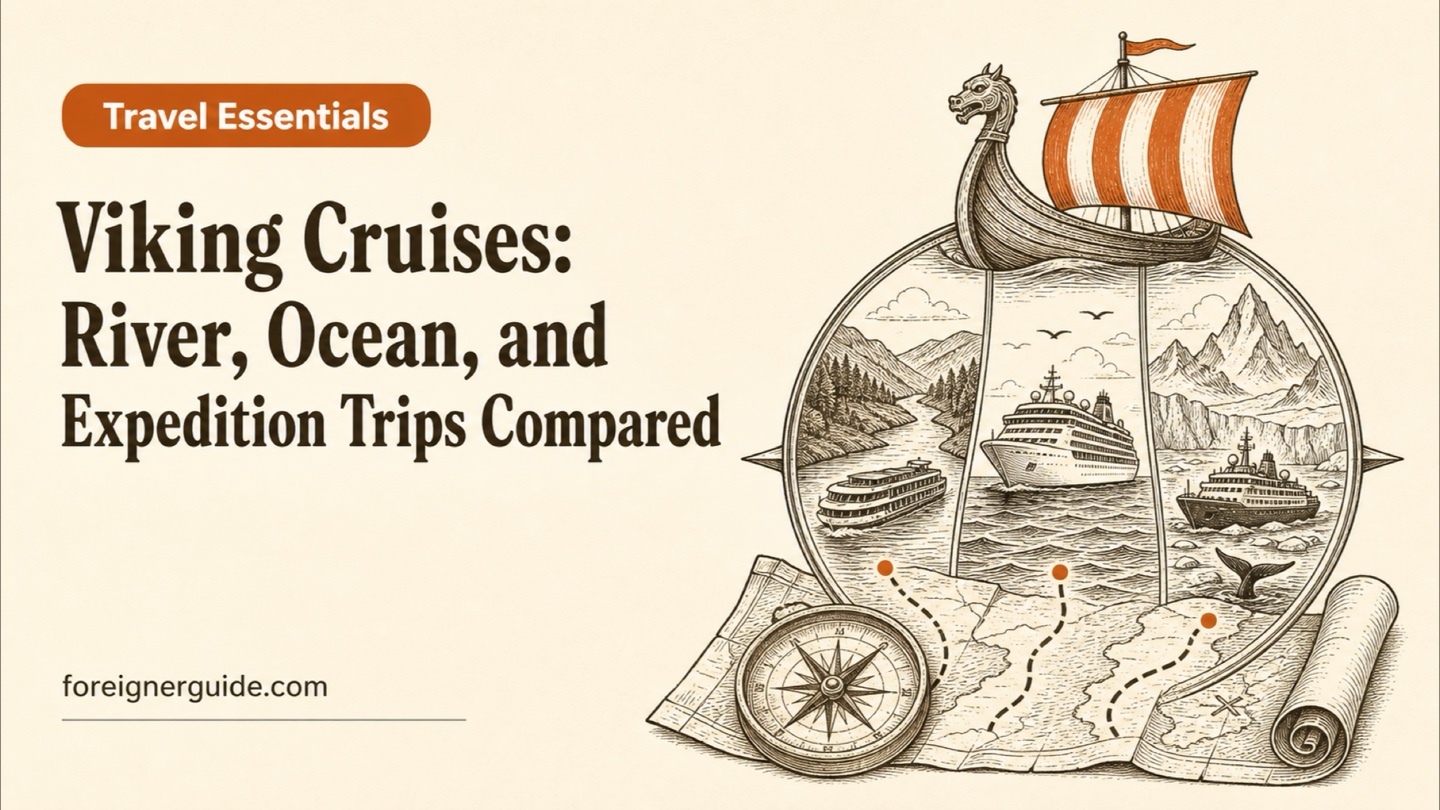
Viking Cruises: River, Ocean, and Expedition Trips Compared
Viking runs adults-only river, ocean, and expedition cruises with fares that include one shore tour per port; deposits start at US$500 per person.
Table of contents
Viking is a cruise line that runs three separate kinds of trips: intimate river voyages, mid-size ocean sailings, and small expedition cruises to polar regions. All three are aimed at adults, since every guest must be 18 or older, and the fares fold in things other lines charge for, including one guided shore tour in each port, meals, and onboard Wi-Fi. According to Viking's own company history, the line started in 1997 under founder Torstein Hagen. The prices, service charges, and policies below reflect what Viking published as of mid-2026 and can change, so confirm the numbers on your own booking.
This guide explains the three cruise types, what the fare covers, and how deposits and cancellations work for someone booking from abroad. It is general travel information, not a booking service or a review of any single itinerary.
A short history and how Viking is organized
Viking began in 1997 when Torstein Hagen founded it as Viking River Cruises, according to the company's own history. It now runs three separate operations. The river business is still its largest. Viking added ocean sailings in 2013 and launched its first ocean ship, the Viking Star, in 2015. The newest arm, Viking Expeditions, started sailing in 2022 with two purpose-built polar ships, the Viking Octantis and Viking Polaris.
The three products share a house style: calm, adult, Scandinavian in design, with no casinos on board. But they visit very different places and carry very different numbers of people. You can see the current lineup on Viking's official site at vikingcruises.com.
River, ocean, or expedition: which is which?
The quickest way to tell the three apart is by ship size and destination. River ships are the smallest and thread through inland waterways, docking in the center of towns. Ocean ships are larger but still modest by cruise-industry standards; Viking says each carries fewer than 1,000 guests, which lets them reach smaller ports. Expedition ships are built with reinforced hulls to push into ice and carry 378 guests, per Viking's fleet information.
| Cruise type | Guests per ship | Where it sails |
|---|---|---|
| River | About 106 to 190 | Rivers such as the Danube, Rhine, Nile, and Mississippi |
| Ocean | Fewer than 1,000 | Seas and coasts worldwide, from the Mediterranean to the Caribbean |
| Expedition | 378 | Polar and remote areas, including Antarctica, the Arctic, and the Great Lakes |
If your goal is walking off the ship into a European old town most afternoons, river is the fit. If you want longer sea crossings and a wider map, ocean covers more ground. Expedition is the niche choice for Antarctica, the Arctic, or the Great Lakes, and it carries gear like kayaks and small submarines that the other two do not.
Is Viking Cruises adults only?
Yes. Viking states that every guest must be 18 or older on the day the cruise departs, and it does not run children's clubs or family cabins on any of its ships. Viking has long aimed its trips at travelers who are 50 and older and drawn to history, art, and culture, so the onboard mood tends toward quiet rather than lively.
The practical takeaway: this suits couples, solo travelers, and groups of adults, and it is a poor match if you are traveling with children or want nightclub-style entertainment. If you are still weighing where a slower, culture-first trip fits your year abroad, it pairs more naturally with independent travel than with a family holiday.
What the fare includes, and what costs extra
Viking markets its fares as inclusive, and its fare information lists a consistent set of items built into the base price:
- All meals on board, with no extra charge at any restaurant
- Beer, wine, and soft drinks with lunch and dinner
- One guided shore excursion in each port
- Wi-Fi
- Access to the spa's thermal area and self-service laundry
Some things still land on your onboard bill. As of mid-2026, Viking's fare information lists a daily service charge of about US$20 per guest per day, added automatically to your account. Premium spirits and cocktails outside meals cost extra unless you buy the Silver Spirits beverage package, and so do spa treatments and any optional excursions beyond the one included per port. Pricing these out before you sail keeps the final total from catching you off guard.
How do deposits and cancellations work?
A deposit holds your cabin, and cancellation fees grow as the sailing date gets closer. Viking's Booking and Sale Terms and Conditions call for a cruise-fare deposit of US$500 per person on standard voyages. For its longest trips, the World and Grand cruises of more than 35 days, Viking's terms require a deposit of 20% of the full fare and set final payment at least 180 days before departure.
Cancellation charges follow a sliding scale in the same terms: a small administrative fee if you cancel well ahead, stepping up toward the full fare as you reach the final weeks. The exact percentages depend on the itinerary and any promotional fare, so the schedule printed on your invoice is the one that counts, and Viking requires cancellations in writing. You can read the current version on Viking's official terms and conditions page. Because those penalties can climb to the full fare, many travelers weigh a travel insurance policy that covers cancellation before making final payment.
Booking tips for travelers living or moving abroad
Viking itineraries usually touch several countries, which matters more if you hold a passport that needs visas or you are booking from outside your home country. A few things to line up early:
- Check that your passport stays valid well beyond your return date; many countries ask for at least six months of validity on arrival.
- Confirm entry rules for every country on the route, not just the first, because each port you visit can have its own requirements. The guide on what to confirm about travel visas before you book walks through this.
- Map the deposit and final-payment dates against your own budget, since the US$500 deposit is due at booking and the balance falls due months later.
- Remember that only one shore tour per port is included; if you want a specific optional excursion, it can sell out, so book it when reservations open.
None of this is unique to Viking, but the long, multi-country routes make the paperwork worth sorting before you pay the balance.