How to Get Upgraded to Business Class: Bids, Miles, and Status
Four real ways to reach business class: elite-status upgrades, paid upgrade bids run by Plusgrade, miles-or-cash upgrades, and last-minute airport offers.
Table of contents
Four routes lead to a business class seat without paying full price for a business ticket: hold high-tier airline loyalty status that puts you on the free upgrade list, place a paid upgrade bid after you book, spend miles (sometimes with an extra cash charge on top), or grab a discounted upgrade at check-in or the gate when premium seats stay empty. As of mid-2026, the exact rules come from each airline. American Airlines publishes a precise priority order for its free upgrades, and a technology company called Plusgrade runs the bidding auctions for dozens of carriers. This guide covers the standard, published upgrade paths on scheduled airlines. It does not cover the fine print of any single loyalty program or the perks tied to specific travel credit cards.
The four routes, side by side
Each path suits a different kind of traveler. Someone who flies the same airline fifty times a year should chase status. Someone who flies twice a year is better off bidding or watching for a cheap airport offer. Here is how they compare.
| Upgrade path | Best for | What it costs | When you find out |
|---|---|---|---|
| Elite status upgrade | Frequent flyers with a loyalty tier | Free (you earn it by flying) | Hours to days before departure |
| Upgrade bid | Anyone on an eligible fare | A cash bid, charged only if you win | Usually 24 to 48 hours before |
| Miles or cash upgrade | Anyone holding miles | Miles, sometimes plus a cash copay | At booking, or later if seats open |
| Airport or gate upgrade | Anyone, when seats stay empty | A discounted cash price | At check-in or the gate |
The word "copay" here means an extra cash charge the airline adds on top of the miles you spend. Not every award requires one, but long-haul business upgrades often do.
Does elite status actually get you upgraded?
Yes, but only when a premium seat goes unsold and you sit high enough on the list. Elite status (a loyalty tier you earn by flying often) is the most consistent free path to the front of the plane, especially on domestic routes. Airlines add their status members to a complimentary upgrade list, which is really a waitlist that clears automatically before departure.
Where you land on that list is not random. American Airlines states that its complimentary upgrade priority runs in this order: AAdvantage elite status first, then the type of upgrade requested, then the Loyalty Points you earned in the past 12 months, then the fare class you bought (the letter code on your ticket that reflects the fare you paid), and finally the date and time you asked. American also publishes when each tier starts clearing before a flight:
- Concierge Key: up to 120 hours before departure
- Executive Platinum: up to 100 hours before
- Platinum Pro: up to 72 hours before
- Platinum: up to 48 hours before
- Gold: up to 24 hours before
Other airlines rank their own way. United Airlines lists its top-published Global Services members ahead of everyone regardless of fare class, followed by Premium Plus passengers, then travelers redeeming miles or PlusPoints (United's own upgrade credits), and only then its free-upgrade elites (Premier 1K, Platinum, Gold, and Silver, in that order). One quiet detail matters here: paid upgrades and mileage redemptions usually clear first, so on a busy flight the free list may never move at all.
How do airline upgrade bids work?
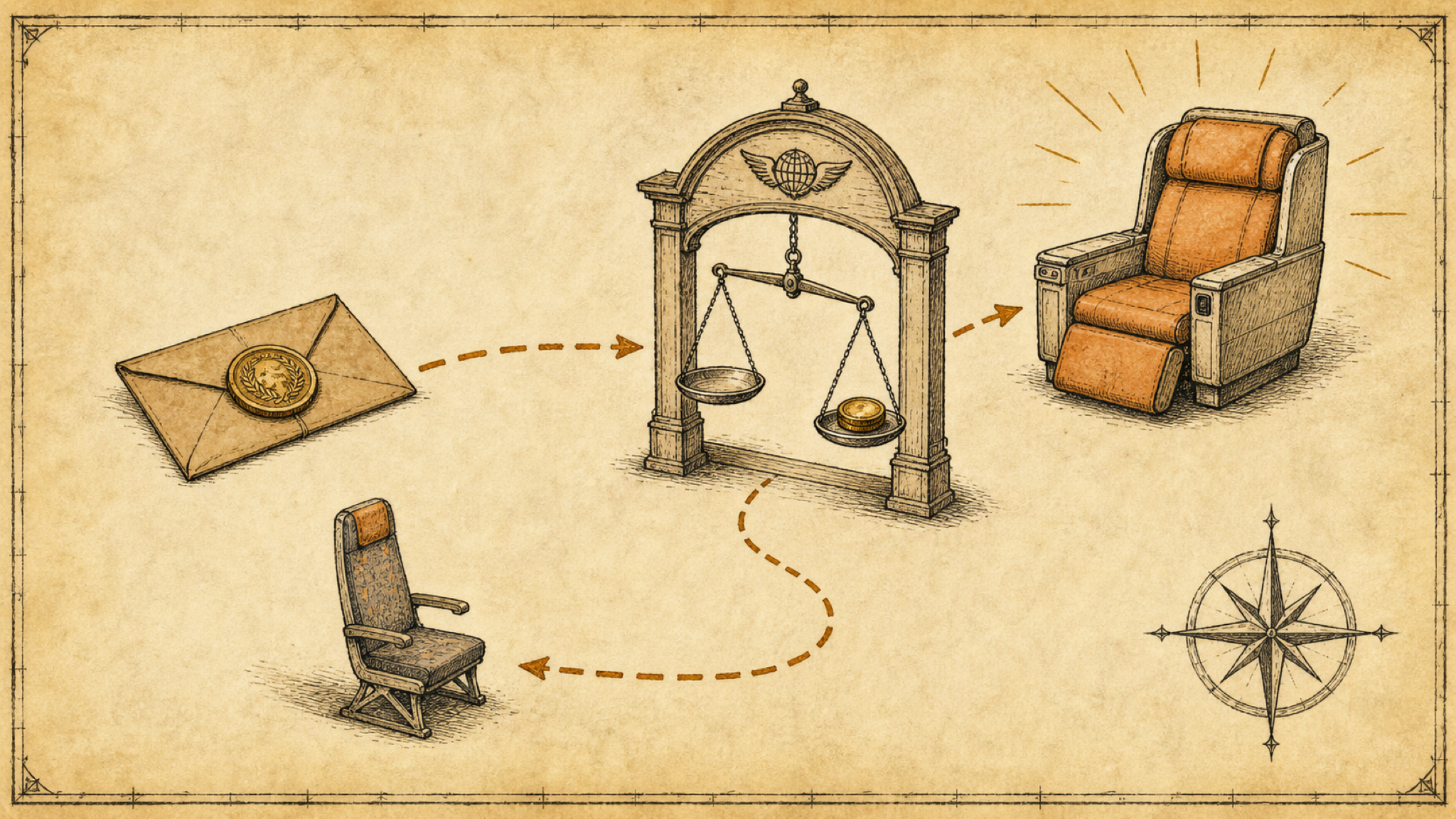
You name a price for an empty business class seat after you have booked, and you pay only if the airline accepts your offer. Plusgrade, the company behind most of these auctions, says its upgrade platform runs for more than 80 airlines worldwide. If you have flown Air Canada, ANA, Cathay Pacific, Etihad, Lufthansa, Qantas, or Virgin Atlantic, you have probably seen one of these invitations.
The mechanics are consistent across carriers. Bidding typically opens between two and seven days before the flight and can close as little as five hours before departure. You enter a credit card up front, but the airline charges it only if your bid wins. You cannot pay a bid with cash or with your frequent-flyer miles. Winners usually hear back 24 to 48 hours before takeoff, and if your bid loses, you keep your original seat and pay nothing extra. One warning: once a winning upgrade has been used, it is generally non-refundable.
Not everyone can bid. Basic economy fares are often excluded, you usually need to have booked directly with the airline, and the specific route has to qualify. Some airlines email eligible passengers automatically; many do not. If yours stays silent, look for the upgrade or "Plusgrade" page on the airline's site and enter your booking reference to check. And a real limitation worth knowing: the three big US carriers (American, Delta, and United) partner with Plusgrade for other things but do not run bid-to-upgrade auctions, so this route mostly applies to international airlines.
Upgrading with miles or cash
Anyone with a miles balance can try to upgrade, subject to how many premium seats the airline releases. The catch is dynamic pricing: most major programs no longer use a fixed chart, so the cost shifts with route, date, and demand. Travel publications commonly report domestic first class upgrades in the range of roughly 10,000 to 30,000 miles and long-haul business class from about 25,000 miles and up, often with a cash copay attached. Treat those as ballpark figures, not a guarantee. The number you actually see at booking can be higher or lower.
Two habits help. Check upgrade space the moment you book, since award seats are limited and disappear fast, and price the upgrade against simply buying a discounted business fare outright, which is occasionally cheaper. If you are still mapping out costs for the whole trip, it is worth folding the upgrade decision into your wider budgeting, the same way you would weigh flights, insurance, and lodging when you plan a trip abroad.
Timing, fare class, and asking in person
Two things quietly decide your odds before you ever ask: what ticket you bought and when you fly. The cheapest basic economy fares are often shut out of upgrades entirely or sit at the very bottom of the list, so if a business seat matters to you, buy at least a standard economy fare. On timing, midweek departures (Tuesday and Wednesday) and off-peak stretches of the year tend to leave more premium seats unsold, simply because fewer business travelers are buying them at retail. It is a pattern, not a promise, but it is a real edge.
At the airport, the honest advice is unglamorous. Dressing sharply or charming the gate agent almost never produces a free upgrade anymore. What does work is watching the airline's own app and self-service kiosks for discounted last-minute upgrade offers, and politely asking a gate agent near boarding whether any paid upgrades remain. Use the carrier's official channels rather than a third-party alert, the same principle that applies when you check flight status from official sources.
A short checklist before you try
Before you count on any of this, run through five quick checks. Confirm your fare is upgrade-eligible (not basic economy). Look up your airline's published upgrade order so you know where you would sit. If you hold status, make sure you are on the complimentary list for the flight. If your airline uses Plusgrade, check the bid page and enter a bid you would be genuinely happy to pay. And keep the official app open on travel day for any last-minute offer. You can read Plusgrade's own description of how the auctions work at plusgrade.com, and each airline's rules on its home site, such as aa.com. None of these guarantees a business seat. Together they give you the best honest shot at one.