How El Niño Affects Travel Planning: Rain, Storms, and Ski Season
How El Niño shifts rain, storms, and snow by region, and how travelers can plan around it. NOAA has an El Niño advisory in effect as of July 2026.
Table of contents
El Niño is a natural shift in Pacific Ocean temperatures that rearranges rainfall, storms, and snow across large parts of the world for a season or two. That makes it worth understanding before you book, because it changes where and when the weather is likely to cooperate with a trip. In broad terms, it tends to make some regions wetter and stormier, such as parts of South America and the southern United States, and others hotter and drier, such as Southeast Asia, Indonesia, and Australia. As of July 2026, NOAA's Climate Prediction Center has an El Niño Advisory in effect and expects the pattern to strengthen into late 2026, with roughly a 97% chance it lasts through early spring 2027. Treat this as general planning background for international travelers and people living abroad, not a forecast for any single destination or date. Always check the local outlook before you commit.
What El Niño actually is
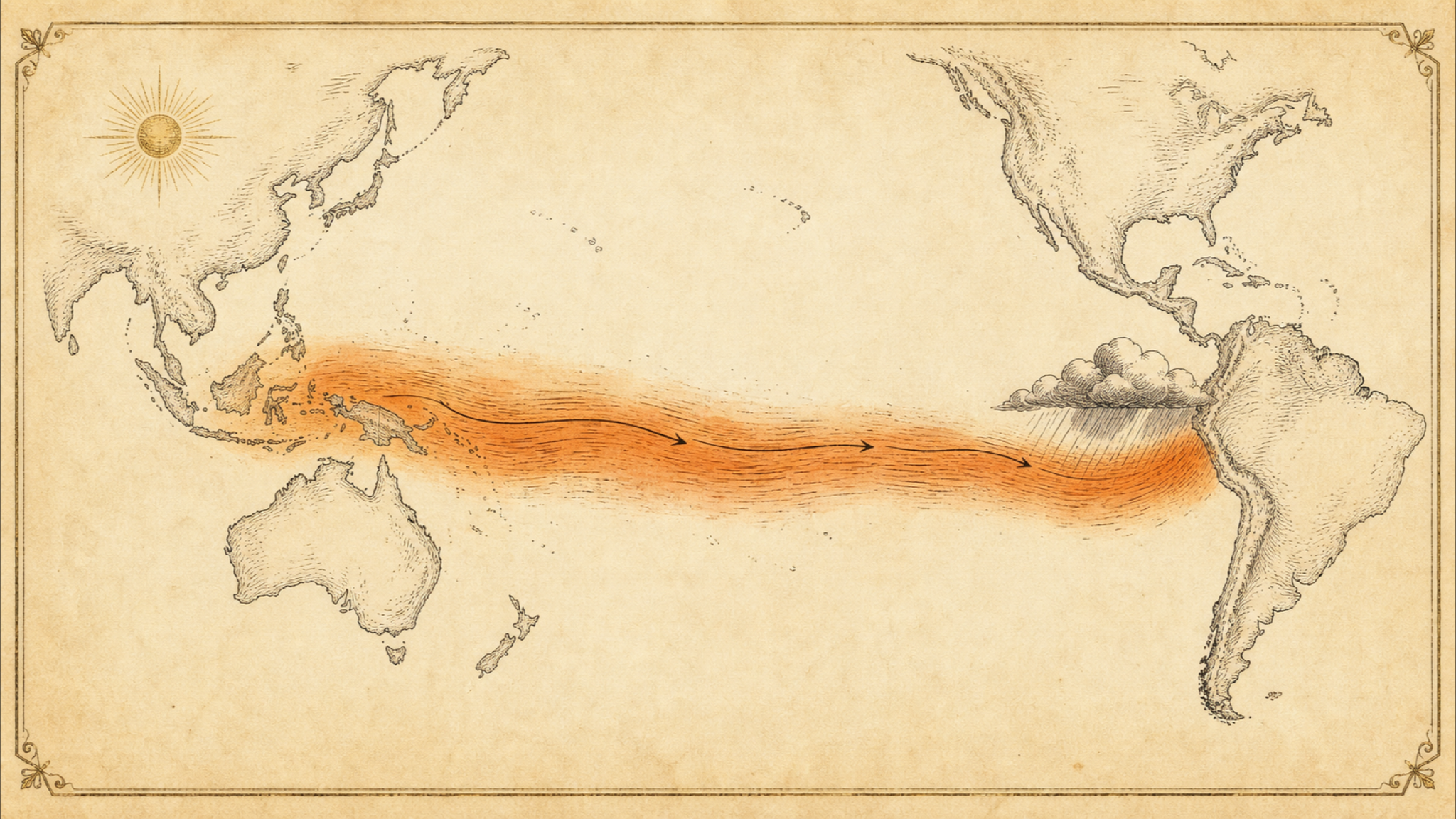
El Niño is one phase of a natural climate pattern called the El Niño–Southern Oscillation, or ENSO, which is the back-and-forth warming and cooling of the tropical Pacific Ocean. During El Niño, sea surface temperatures in the central and eastern equatorial Pacific run warmer than average, and that warmth nudges the atmosphere's jet streams (the high-altitude wind belts that steer storms) into new positions. NOAA measures the strength with the Niño-3.4 index, a sea temperature reading from a defined stretch of the Pacific. NOAA reported the weekly Niño-3.4 value near +1.7°C in June 2026 and classifies an event as "very strong" once it passes +2.0°C. You can read the plain-language background on NOAA's El Niño overview. The point for a traveler is simple: a warmer Pacific reshuffles the odds of rain, drought, and storms thousands of miles from the equator.
Which regions get wetter, and which get drier?
El Niño usually pushes extra rain toward the eastern Pacific and the Americas and pulls rain away from Southeast Asia and Australia. According to NOAA, the typical seasonal tendencies look like this:
| Region | Typical El Niño tendency | Travel angle |
|---|---|---|
| Southeast Asia, Indonesia | Drier, hotter | Sunnier dry season, but haze and wildfire risk |
| Australia | Drier, warmer | Higher bushfire risk in summer |
| Northern Peru, Ecuador | Wetter, flood-prone | Coastal disruption and road delays |
| Southern US, California | Wetter, stormier | Rain and flight delays |
| US Pacific Northwest | Warmer, drier | Less reliable snow |
These are tendencies over a whole season, not a promise for any given week. If you are timing a trip around Southeast Asia's rainy months, our guide to Singapore's monsoon season shows how much the wet-season window can move from year to year.
How El Niño changes hurricane and typhoon seasons
El Niño tends to quiet the Atlantic hurricane season while making the Pacific more active. NOAA's hurricane researchers explain that El Niño raises vertical wind shear over the Atlantic, meaning a bigger change in wind speed and direction with height, which tears developing storms apart before they organize. The same setup favors more storms in the central and eastern Pacific, and the northwest Pacific usually sees more typhoons. For planning, a Caribbean or US East Coast trip may face somewhat lower hurricane odds in an El Niño year, while destinations like Japan, the Philippines, and the Pacific islands can see a busier typhoon season. The Atlantic season still runs roughly June through November, and the western Pacific can stay active later, so check the specific window for your destination rather than assuming a quiet year.
What it means for ski and dry-season trips
For winter-sports travelers, El Niño moves the snow around. NOAA's seasonal outlooks show it tends to steer storms toward the southern tier of North America, which favors the Sierra Nevada and the Southern Rockies, while the Pacific Northwest and interior British Columbia often turn warmer and drier. In the European Alps the signal is weaker and less consistent, but warmer air at lower elevations can lift the snowline, so higher resorts are the more dependable choice in a strong El Niño winter. Dry-season and beach travelers can gain on the other side of the pattern: Southeast Asia's dry months can run drier and sunnier, though that same dryness raises the risk of wildfire smoke and haze in Indonesia and nearby countries.
How should I adjust my travel plans?
Treat El Niño as a reason to build in flexibility, not to cancel. A few concrete steps:
- Read the source, not the headlines. NOAA's Climate Prediction Center and the World Meteorological Organization publish plain-language ENSO updates every month.
- Favor flexible bookings. Refundable rates or fare classes that allow free changes are worth the small premium in a stormier season.
- Use the shoulder seasons. If a region trends wetter, moving a trip a few weeks earlier or later can dodge the worst of it.
- Get travel insurance that covers weather disruption, and read what "trip delay" and "trip interruption" actually include.
- Pack for the shifted odds: rain gear for wetter regions, and check air-quality and wildfire alerts where drought raises smoke risk.
The same flexible-timing habit helps with any weather-driven trip. Our guide on Turkey's summer heat is a good example of planning around a seasonal peak instead of fighting it.
El Niño doesn't make travel unsafe. It shifts the odds, and knowing which way the weather is likely to lean lets you choose your timing, your destination, and your booking terms with a clearer head.